Agricultural sector
A sustainable solution for agricultural disinfection
In agricultural environments, cleanliness and sanitary control are essential to ensure the health of crops and animals. Solus provides powerful disinfection designed for safer use when used as directed and easy integration into daily operations. Effective even in the presence of organic matter, it has lower toxicity when used as directed, low corrosivity, produces no harmful fumes, and leaves no residue, supporting a healthy environment for animals, crops, and workers.
Application Areas
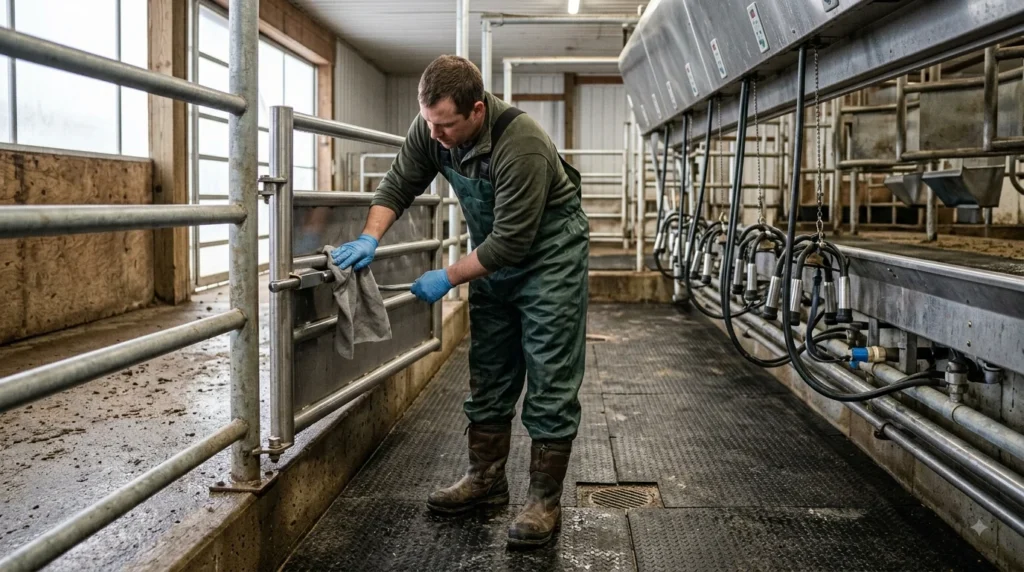
Livestock buildings and agricultural equipment
Effectively disinfects enclosures, floors, walls, feeders, and waterers when used as directed. Its lower-toxicity formula when used as directed and low corrosivity support frequent use while helping protect equipment and maintain a healthy environment.
Water systems and irrigation lines
Controls bacteria, pathogens, and biofilm in water lines. Used continuously or during cleaning, it ensures cleaner, more stable water, essential for animal health and crop performance.
Production and processing areas
Enables the disinfection of surfaces and equipment in contact with agricultural products, reducing the risk of cross-contamination without leaving residues or requiring rinsing.
Biofilm and pathogen control
Effectively eliminates biofilm and maintains high efficacy even in the presence of organic matter, helping to reduce microbial pressure in agricultural environments.
Reimagined disinfection
Designed for use around animals and workers when used as directed
A lower-toxicity formula when used as directed, with no harmful fumes, supporting frequent use while helping reduce exposure risks for animals, crops, and workers.
Residue-conscious; follow label directions, including rinse recommendation where applicable.
Leaves no residue on surfaces or in water systems, eliminating contamination risks and additional steps.
Effective in the presence of organic matter
Maintains high effectiveness even in heavily soiled environments such as farms and livestock areas.
Low corrosivity
Protects equipment, infrastructure, and irrigation systems, reducing maintenance costs and extending their service life.
Toxic and irritating
They can affect the health of animals and workers, require significant precautions, and increase exposure risks.
Leave residues
They can contaminate surfaces, water, or food, requiring rinsing to avoid impacts on animal health or production.
Lose effectiveness in real-world conditions
Become less effective in the presence of manure, soil, or organic matter, reducing their effectiveness in real-world field conditions.
Corrosive to equipment
They damage installations, water systems, and agricultural equipment, leading to additional costs.