Agricultural sector
A sustainable solution for agricultural disinfection
In agricultural environments, cleanliness and sanitary control are essential to ensure the health of crops and animals. Solus offers a Multi-Purpose Disinfectant for authorized hard, non-porous agricultural surfaces. It provides a reduced-toxicity option when used as directed. Follow the label and check material compatibility.
Application Areas
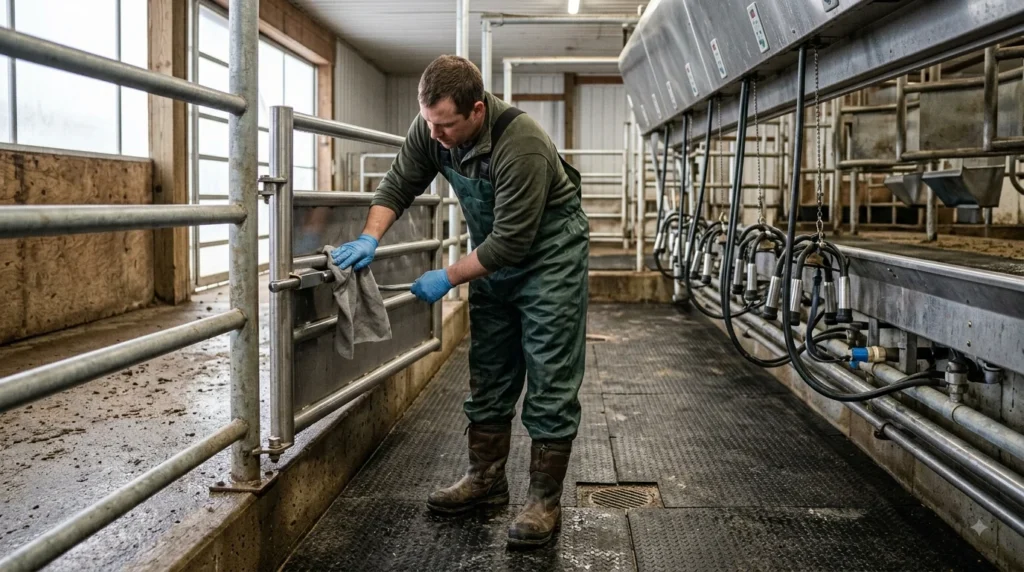
Livestock buildings and agricultural equipment
Disinfects authorized hard, non-porous surfaces in agricultural facilities according to the label. Its lower-toxicity formula when used as directed and low corrosivity support routine surface-care programs while helping protect equipment. For poultry facilities, see the poultry-barn disinfectant guide.
Water systems and irrigation lines
Follow the label for authorized hard, non-porous agricultural surfaces and equipment; do not apply the product to water systems or irrigation lines unless that use appears on the label. For broader farm zoning, see the livestock biosecurity guide.
Production and processing areas
Supports disinfection of authorized hard, non-porous agricultural surfaces and equipment when used as directed. Follow all applicable label rinse directions.
Label-led surface disinfection
Pre-clean visible soil and disinfect authorized hard, non-porous agricultural surfaces according to the label. For food-processing equipment, see the dairy-equipment disinfectant guide.
Reimagined disinfection
Use around animals and workers
A lower-toxicity formula when used as directed, with no harmful fumes, supporting frequent use while helping reduce exposure risks for animals, crops, and workers.
Low residue
Follow the label, including applicable rinse directions, when disinfecting authorized hard, non-porous surfaces.
Pre-clean before disinfection
Remove visible soil before disinfection, then follow the label contact time and other directions.
Low corrosivity
Check material compatibility and follow the label to help limit unnecessary surface wear.
Toxic and irritating
They can affect the health of animals and workers, require significant precautions, and increase exposure risks.
Leave residues
They can contaminate surfaces, water, or food, requiring rinsing to avoid impacts on animal health or production.
Lose effectiveness in real-world conditions
Become less effective in the presence of manure, soil, or organic matter, reducing their effectiveness in real-world field conditions.
Corrosive to equipment
They damage installations, water systems, and agricultural equipment, leading to additional costs.