
Direct answer
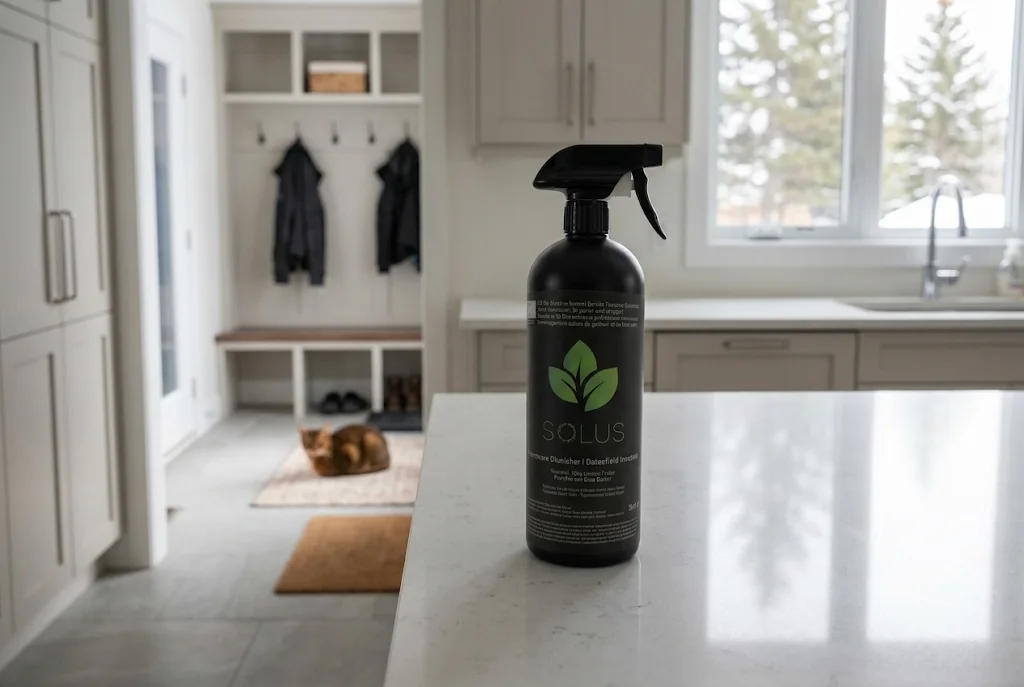
A “pet-safe disinfectant” is best understood as a disinfectant you can use responsibly on hard surfaces around pets — not a product to apply to an animal. No disinfectant should be applied to a pet’s skin, coat, food or water. For homes and facilities with animals, the practical goal is a hard-surface disinfectant described as lower-toxicity when used as directed, used label-led, including a potable-water rinse for surfaces animals may contact. Solus’s Multi-Purpose Disinfectant is a near-neutral hypochlorous acid (HOCl) disinfectant (Health Canada biocide market authorization no. 02557371) used exactly this way.
For an overview, see our hypochlorous acid (HOCl) guide.
Key takeaways
- A disinfectant is for surfaces, not for animals — never apply it to a pet’s skin, coat, paws, food or drinking water.
- For surfaces a pet may contact directly (bowls, feeding areas), the current label recommends a potable-water rinse after application.
- Keep pets away from a treated surface until it has been used per the label and, where applicable, rinsed and dried.
- Solus’s Multi-Purpose Disinfectant is near-neutral (pH 5.0–7.0). Follow the PPE requirements on the current label and SDS. Follow the current label for rinsing and residue management.
- Follow the current label and SDS for authorized hard, non-porous surfaces, contact times and rinsing.
On this page
- What does “pet-safe disinfectant” mean?
- Never apply a disinfectant to an animal
- Which surfaces around pets need care?
- How to disinfect around pets, step by step
- Where Solus fits
- Where the scope stops
- Frequently asked questions
“Pet-safe” doesn’t mean you use it on the pet — it means a hard-surface disinfectant you can use responsibly around animals, exactly as the label directs, rinsing the surfaces they touch.
— Philippe Mathys, Solus
What does “pet-safe disinfectant” mean?
People search for a “pet-safe disinfectant,” but the honest reading is narrow: a disinfectant for the hard surfaces in a home or facility with animals — floors, crates, hard bowls, and similar — used according to its label. It does not mean a product that is safe to apply to a pet, and no disinfectant should be used on an animal’s skin, coat, paws, food or water. The useful question is what the current label and SDS require for handling, PPE, and rinsing surfaces animals may contact.
Never apply a disinfectant to an animal
Disinfectants are regulated for surfaces, not for living animals. Do not spray or wipe a disinfectant onto a pet, its paws, its coat, its food or its drinking water. If an animal needs cleaning or care, use a product intended and authorized for that purpose, or consult a veterinarian. This article is about disinfecting the environment around pets — not the pets themselves.
Which surfaces around pets need care?
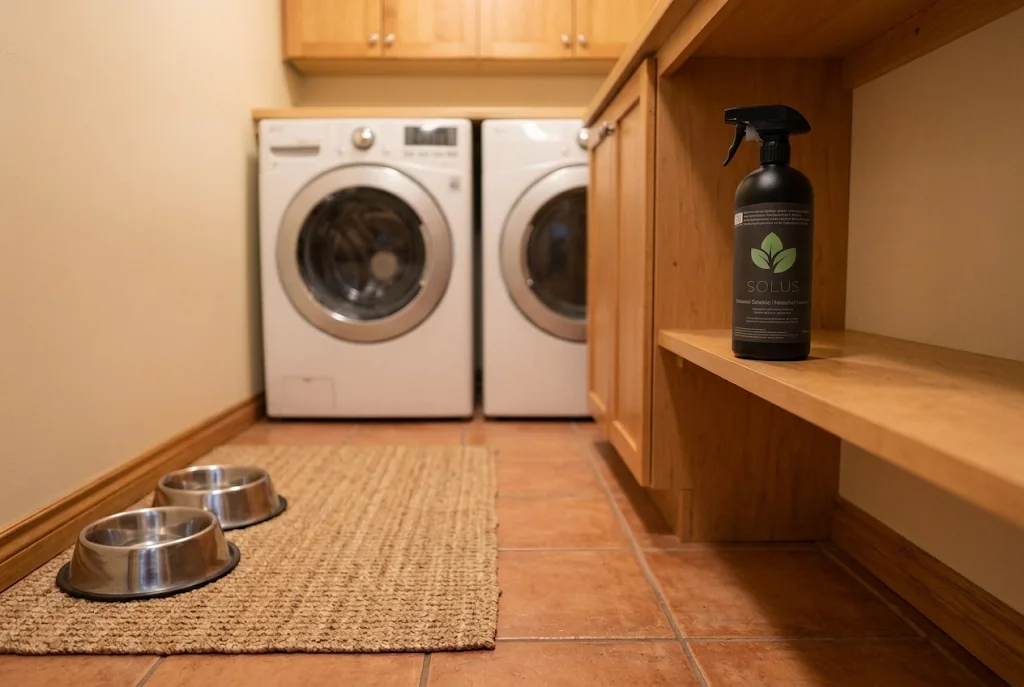
Separate hard, non-porous surfaces (which can be disinfected per the label) from soft or porous items (which are outside this procedure). Hard floors, sealed crate trays, and hard food or water bowls can be cleaned and then disinfected on the label’s terms. Because a bowl or feeding surface may directly contact food, feed or the animal, treat it as a food-contact surface: complete the potable-water rinse the label recommends after application. Soft items — fabric beds, plush toys, cloth — are porous and are not hard-surface targets.
How to disinfect around pets, step by step
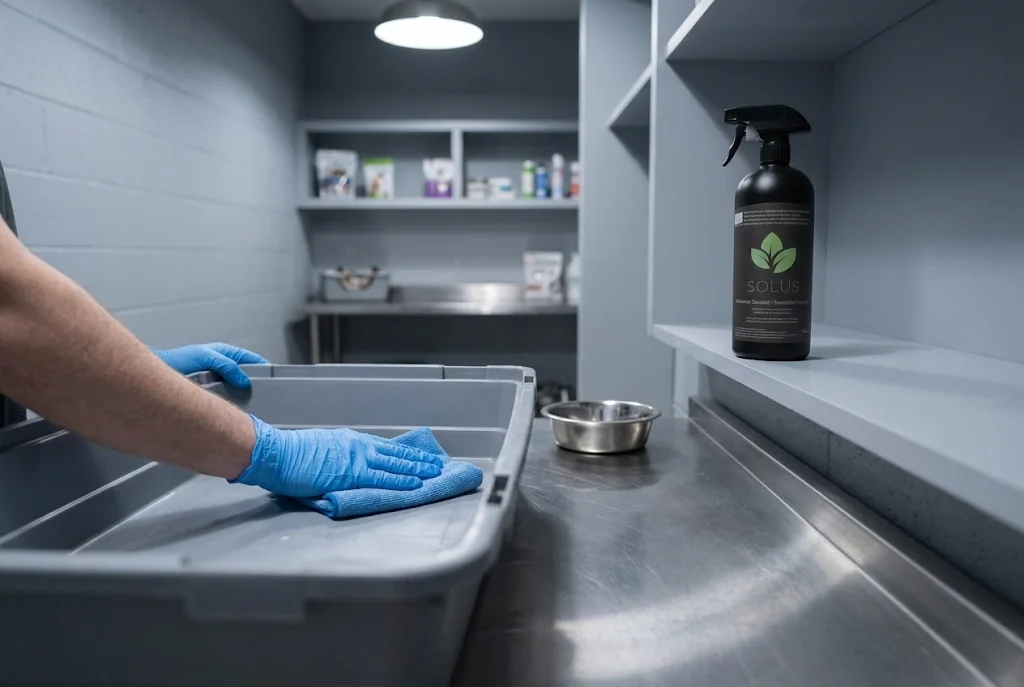
Remove the pet from the area, then clean the surface to remove visible soil. Apply the disinfectant to the authorized hard, non-porous surface and keep it wet for the full label contact time. For any surface or object the animal may contact directly — a bowl, a feeding mat’s hard tray — complete a potable-water rinse after application, as the label recommends. Let the surface dry and keep the pet away until the process is complete. Do not spray into the air, and do not treat bedding or plush toys as hard surfaces.
Where Solus fits
Solus’s Multi-Purpose Disinfectant is a near-neutral HOCl disinfectant (pH 5.0–7.0, SDS §9) and is not WHMIS-regulated (§15). Follow the PPE requirements on the current label and SDS. Follow the current label for rinsing and residue management. The current label concentration is 367 ppm free available chlorine. It holds Health Canada biocide market authorization no. 02557371 for authorized hard-surface disinfection. Used label-led — on hard surfaces, with a potable-water rinse for surfaces animals may contact — it fits a home or facility with pets. It is not applied to animals, food or water.
Setting up a routine in a home or facility with pets? See the Solus product range and the product documentation.
Solus ships within Canada only.
Where the scope stops
This guide covers hard, non-porous surface disinfection in environments with pets. It does not cover application to an animal’s skin, coat, paws, wounds, food or drinking water, and it does not make the product a veterinary or animal-care product. Pet bowls and feeding surfaces are food-contact surfaces and require the label’s potable-water rinse. Soft and porous items are outside the procedure. If a surface or use falls outside the current label, stop and use the appropriate authorized product and process.
Frequently asked questions
Is there such a thing as a pet-safe disinfectant?
A disinfectant is for hard surfaces, not for animals. A responsible “pet-safe” approach means using a hard-surface disinfectant described as lower-toxicity when used as directed around pets exactly as the label directs — including a potable-water rinse for surfaces animals may contact — and never applying it to the animal itself.
Can I use the Multi-Purpose Disinfectant on my pet?
No. The Multi-Purpose Disinfectant is a hard-surface disinfectant. Do not apply it to a pet’s skin, coat, paws, food or drinking water. Use it on authorized hard surfaces per the label, and consult a veterinarian for any animal-care need.
Do pet bowls need rinsing after disinfection?
Yes. A bowl or feeding surface may directly contact food or the animal, so treat it as a food-contact surface and complete the potable-water rinse the current label recommends after application.
Is the Multi-Purpose Disinfectant low-toxicity to have around a home with pets?
Solus describes its Multi-Purpose Disinfectant as a lower-toxicity option when used as directed. Follow the PPE requirements on the current label and SDS. Follow the current label for rinsing and residue management. That describes handling, not permission to apply it to an animal. Keep pets away from treated surfaces until the process is complete, and follow the label.
Can I disinfect while my pet is in the room?
Remove pets from the area during application and contact time, apply only to hard, non-porous surfaces, do not spray into the air, and complete any label-recommended rinse before pets return. Follow the current label.
Final thoughts
“Pet-safe disinfectant” is about disinfecting the environment around animals responsibly — not treating the animals. Choose a hard-surface disinfectant described as lower-toxicity when used as directed, use it label-led, rinse the surfaces pets may contact, and keep pets away until the surface is ready. Solus’s Multi-Purpose Disinfectant fits that role with Health Canada biocide market authorization no. 02557371, a near-neutral formula and documented GLP evidence — never applied to animals, food or water.
See also
Sources
- Solus biocide market authorization no. 02557371 and current label (rinse for surfaces contacting animals/food).
- Solus SDS §8 (PPE), §9 (pH), §15 (WHMIS).
- Analytical Lab Group GLP reports A30442, A30618, A31073.
