
Direct answer
HOCl and hypochlorite are two forms of the same free available chlorine, and the balance between them shifts with pH. Hypochlorous acid (HOCl) is the more biocidally active species and predominates near neutral pH. Hypochlorite (OCl⁻) predominates at the high pH of bleach. Solus's Multi-Purpose Disinfectant is stabilized hypochlorous acid at 367 ppm free available chlorine, under Health Canada biocide market authorization no. 02557371. For winter deep-cleaning, the practical differences are pH, handling, and material compatibility — always within the current label.
For an overview, see our hypochlorous acid (HOCl) guide.
Key takeaways
- HOCl and hypochlorite are two forms of the same free available chlorine, shifting with pH.
- Hypochlorous acid (HOCl) is the more biocidally active species and predominates near neutral pH.
- Hypochlorite (OCl⁻) predominates at the high pH of household and industrial bleach.
- Solus's Multi-Purpose Disinfectant is stabilized HOCl at 367 ppm free available chlorine, biocide market authorization no. 02557371.
- Tested efficacy covers only the listed organisms; AOAC Use Dilution results are pass/fail, not percentages.
On this page
- What is the difference between HOCl and hypochlorite?
- Why does pH decide which form you get?
- How do the two compare for winter deep-cleaning?
- What has Solus's HOCl been tested against?
- How should a commercial team deep-clean with it in winter?
- Where does the comparison stop?
- Frequently asked questions
Same chlorine family, different working form. For winter deep-cleaning, the question isn't "chlorine or not" — it's which form, at what pH, on which surface. — Philippe Mathys, Solus
What is the difference between HOCl and hypochlorite?
Both belong to the same chemistry. When chlorine is dissolved in water, it exists as "free available chlorine," which is present as two species: hypochlorous acid (HOCl) and the hypochlorite ion (OCl⁻). They are not different ingredients so much as two forms of the same disinfecting chlorine, and a solution almost always contains some of each. The ratio between them is what differs from product to product, and that ratio is set mainly by pH.
The reason the distinction matters is that the two forms do not behave identically. Hypochlorous acid is a small, uncharged molecule, while the hypochlorite ion carries a negative charge. In the long-established chemistry of chlorine disinfection, the uncharged HOCl form is recognized as the more biocidally active of the two. That is a statement about the chemistry of chlorine in general, not a comparative performance claim for any one product. What it means in practice is that two solutions with the same total "chlorine" figure can present very different amounts of the active HOCl form, depending on how acidic or alkaline they are. The next section explains why pH is the lever that sets that balance, and our guide comparing HOCl and bleach compared walks through the same idea from the bleach side.
Why does pH decide which form you get?
pH is the single biggest lever over the HOCl-to-hypochlorite ratio. In water, the two forms sit in a balance that tips with acidity: near neutral pH, a large share of the free available chlorine is present as hypochlorous acid; as the solution becomes more alkaline, that balance shifts toward the hypochlorite ion. This is why the pH of a chlorine product is not a side detail — it effectively decides how much of the chlorine is in the more active HOCl form at the moment of use.
Bleach illustrates the alkaline end. Sodium hypochlorite solutions are strongly basic, often around pH 11 to 13, so their free available chlorine sits predominantly as the hypochlorite ion. Solus's Multi-Purpose Disinfectant sits at the other end of the useful range: it is stabilized hypochlorous acid formulated near neutral pH, so its 367 ppm of free available chlorine is present largely as HOCl. That near-neutral chemistry is also what underlies its lower-toxicity handling profile when used as directed — the handling side is covered in our article on whether hypochlorous acid is safe. The takeaway for a buyer comparing products is simple: read the form and the pH, not just the headline chlorine number.
How do the two compare for winter deep-cleaning?
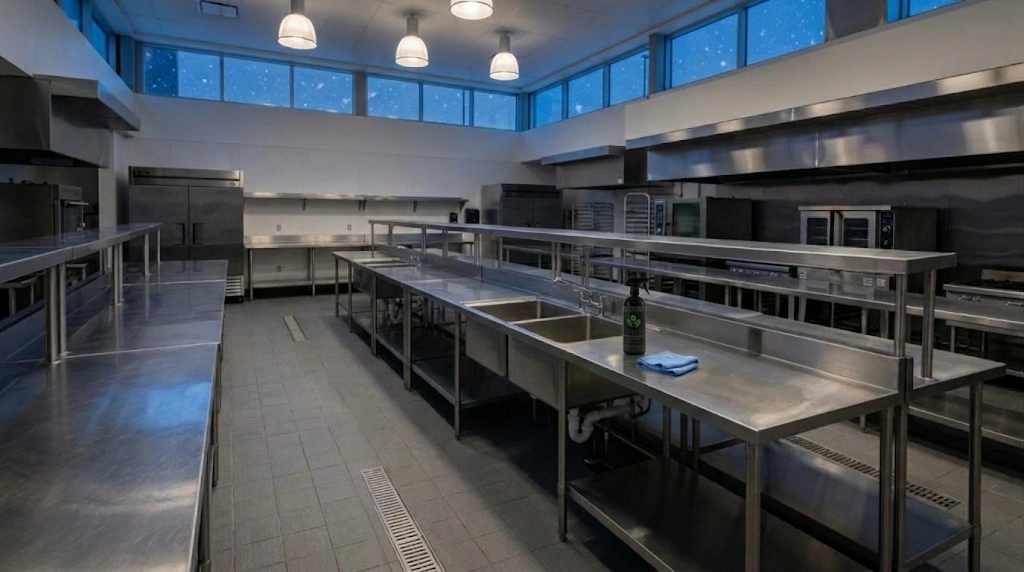
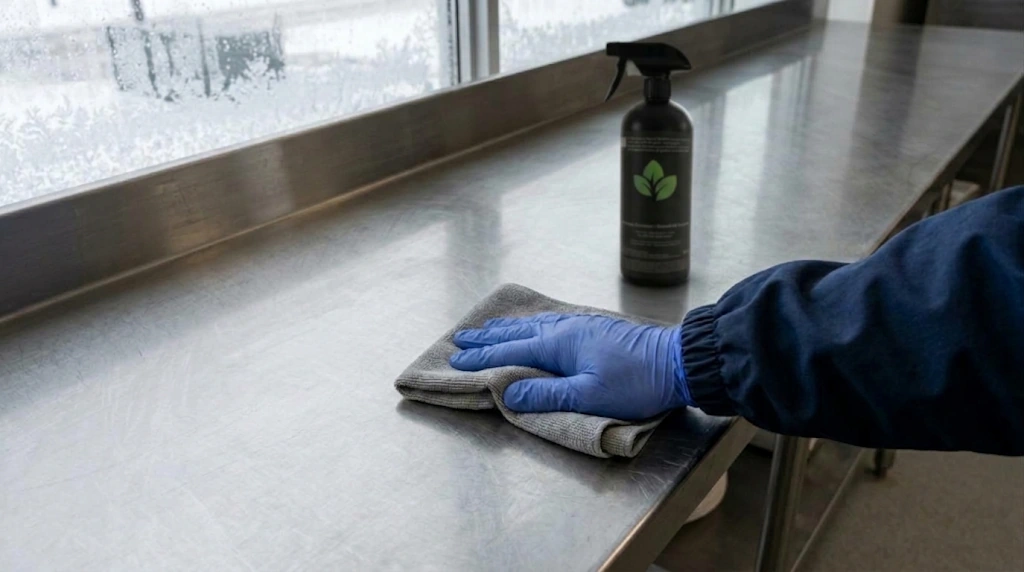
Winter deep-cleaning in a commercial setting adds a few practical constraints, and the HOCl-versus-hypochlorite choice shows up in each. The first is handling: a near-neutral HOCl product is generally easier for a team to use often through a busy season than a strongly alkaline bleach, which demands more caution around skin, eyes, and ventilation. The second is material compatibility: high-pH bleach is harder on many surfaces and finishes over repeated use, whereas a near-neutral product is gentler on the stainless, sealed, and painted surfaces common in commercial spaces — always confirmed against each surface and the current label.
The third constraint is odor and workspace tolerance. Strong chlorine smell is a real limiter on how often staff will deep-clean, particularly in enclosed winter spaces with reduced ventilation. None of this makes bleach wrong for every job — bleach remains a low-cost, high-strength option where its profile fits. The point is to match the form to the task: for frequent, team-run winter deep-cleaning on sensitive surfaces, a stabilized near-neutral HOCl product is often the more practical fit, while reserving stronger hypochlorite products for the jobs that specifically call for them. For a different axis of comparison — chlorine chemistry versus quaternary ammonium — see HOCl versus quats.
| Factor | Stabilized HOCl (near-neutral) | Hypochlorite / bleach (alkaline) |
|---|---|---|
| Dominant active form | Hypochlorous acid (HOCl) | Hypochlorite ion (OCl⁻) |
| Typical pH | Near neutral | Strongly alkaline (~11–13) |
| Handling profile | Lower-toxicity when used as directed | Requires more caution (skin, eyes, ventilation) |
| Odor | Milder | Strong chlorine odor |
| Best-fit use | Frequent routines on sensitive surfaces | High-strength, lower-cost jobs that fit its profile |
Data last verified: October 2026.
What has Solus's HOCl been tested against?
The table below is the complete tested-efficacy set for Solus's Multi-Purpose Disinfectant. Do not extend it to organisms it does not list, and do not convert a pass/fail carrier test into a percentage.
| Organism | ATCC | Protocol | Contact time | Report |
|---|---|---|---|---|
| Staphylococcus aureus | 6538 | AOAC Use Dilution Method; Analytical Lab Group GLP | 10 minutes | A30442 |
| Salmonella enterica | 10708 | AOAC Use Dilution Method; Analytical Lab Group GLP | 10 minutes | A30442 |
| Pseudomonas aeruginosa | 15442 | AOAC Use Dilution Method; Analytical Lab Group GLP | 10 minutes | A30442 |
| Human Coronavirus 229E | VR-740 | Virucidal efficacy on inanimate surfaces; Analytical Lab Group GLP | 1 minute | A30618 |
| Influenza A H1N1 | VR-1469 | Virucidal efficacy on inanimate surfaces; Analytical Lab Group GLP | 1 minute | A31073 |
These are the tested claims and the limit of them. The AOAC Use Dilution rows are reported as pass/fail, without a percentage or log-reduction figure, and the set does not cover organisms it does not list. The chemistry discussion above explains why the active HOCl form matters in general; it does not add efficacy claims beyond this table. The complete records, report numbers, and the current label are on the tested efficacy records page, and product documentation is on the Solus documents page.
How should a commercial team deep-clean with it in winter?
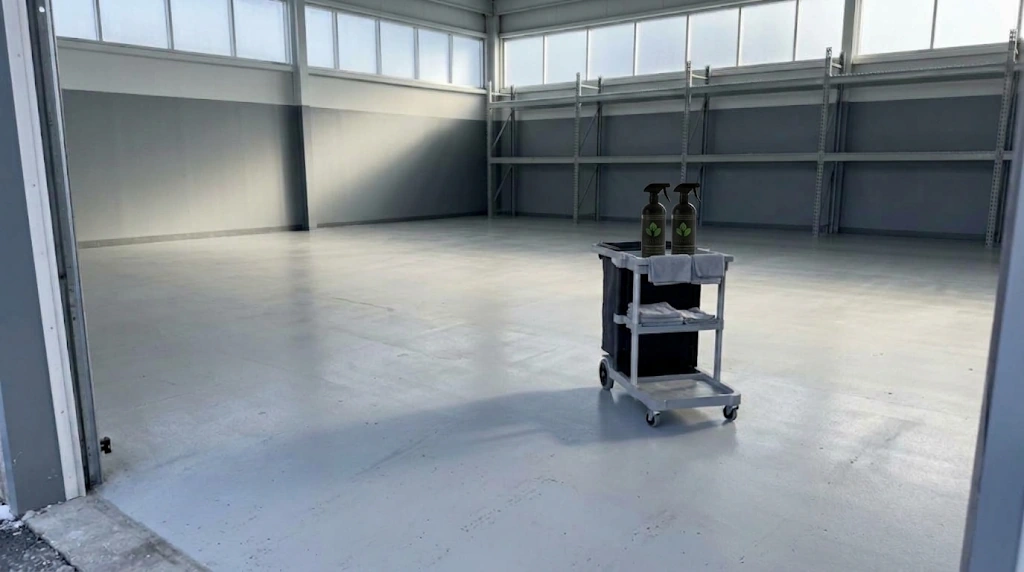
Build the deep-clean around the label, because contact time is what turns application into disinfection. Clean each surface first to remove soil and grease, apply the product as the label directs, and keep the surface visibly wet for the full label contact time before wiping or letting it dry. In a deep-clean, this matters more than usual: heavily soiled surfaces must be pre-cleaned, or the disinfection step is working against a dirty surface. Plan the sequence so high-touch and food-contact zones are handled on their own steps rather than in one rushed pass.
Use the product only on hard, non-porous surfaces, in a well-ventilated area, and never spray it into the air or onto people. For handling, follow the PPE requirements on the current label and SDS, and keep the container sealed between uses. Handle food-contact and direct-contact points by use: the current label recommends a potable-water rinse after application on surfaces or objects that may directly contact infants or toddlers, animals, food, feed, or drinking water, so keep those on a separate rinse step. Winter ventilation is often reduced, which is one more reason a milder-odor, near-neutral product helps a team keep a thorough routine going — provided every step still follows the label.
Where does the comparison stop?
This article compares the chemistry of hypochlorous acid and the hypochlorite ion and how that difference plays out in commercial winter deep-cleaning. The chemistry statements — that free available chlorine exists as both forms, that pH sets the balance, and that HOCl is the more active species — describe chlorine in general; they are not comparative performance claims for any single product. Solus's product claims are limited to its current label and the tested-efficacy table above.
The comparison also does not rank bleach as "bad." Hypochlorite products have legitimate uses where their strength and cost fit the job. What this article argues is narrower: for frequent, team-run winter deep-cleaning on sensitive surfaces, the near-neutral HOCl form is often the more practical fit. It is still a hard-surface disinfectant, not a hand sanitizer, skin antiseptic, or sterilant, and it is never applied to people. If a surface, organism, or application falls outside the current label, stop and use the appropriate authorized product and process.
Specifying a chlorine disinfectant for a winter deep-clean? See the Solus product range and match every surface and method to the current label.
Solus ships within Canada only.
Frequently asked questions
Is HOCl the same thing as bleach?
No, though they share the same chlorine chemistry. Both contain free available chlorine, present as hypochlorous acid (HOCl) and the hypochlorite ion (OCl⁻). Bleach is a strongly alkaline hypochlorite solution; Solus's product is stabilized HOCl near neutral pH. The forms differ, even when the total chlorine figure looks similar.
Why is HOCl described as more active than hypochlorite?
In established chlorine chemistry, the uncharged hypochlorous acid molecule is recognized as the more biocidally active of the two free-available-chlorine forms. That is a general statement about chlorine, not a comparative efficacy claim for a specific product. Solus's efficacy claims are limited to its tested-efficacy table and current label.
Does a higher chlorine number mean a stronger disinfectant?
Not by itself. The same total free available chlorine can be present mostly as active HOCl or mostly as hypochlorite, depending on pH. That is why reading the form and pH matters, not just the headline chlorine figure. Always follow the product's label for concentration, contact time, and use.
Is HOCl gentler on surfaces than bleach for deep-cleaning?
A near-neutral HOCl product is generally gentler on many finishes than strongly alkaline bleach over repeated use, and it has a milder odor. Material compatibility still varies by surface, so confirm each surface against the current label. Reserve stronger hypochlorite products for jobs that specifically fit their profile.
Do I rinse after a winter deep-clean?
The current label recommends a potable-water rinse for surfaces or objects that may directly contact infants or toddlers, animals, food, feed, or drinking water. For other hard surfaces, follow the label's directions and contact time. Keep food-contact surfaces on a separate rinse step.
Final thoughts
HOCl and hypochlorite are two forms of the same chlorine, and the useful question for winter deep-cleaning is which form, at what pH, on which surface. Solus's Multi-Purpose Disinfectant is stabilized hypochlorous acid at 367 ppm free available chlorine, under biocide market authorization no. 02557371, with a near-neutral pH and a lower-toxicity handling profile when used as directed. Match the form to the task, pre-clean before you disinfect, hold the full contact time, rinse where the label requires, and keep every use on authorized hard, non-porous surfaces.
See also
- HOCl vs bleach
- HOCl vs quats
- Is hypochlorous acid safe?
Sources
- Solus biocide market authorization no. 02557371 and current label (367 ppm free available chlorine; use areas; potable-water rinse directions).
- Solus SDS (pH; WHMIS classification §15; handling and exposure precautions).
- Analytical Lab Group GLP reports A30442 (bacterial set), A30618 (Human Coronavirus 229E), A31073 (Influenza A H1N1).
- Established chlorine chemistry: free available chlorine exists as hypochlorous acid (HOCl) and hypochlorite ion (OCl⁻), with the balance set by pH; HOCl is the more biocidally active form.