
Direct answer
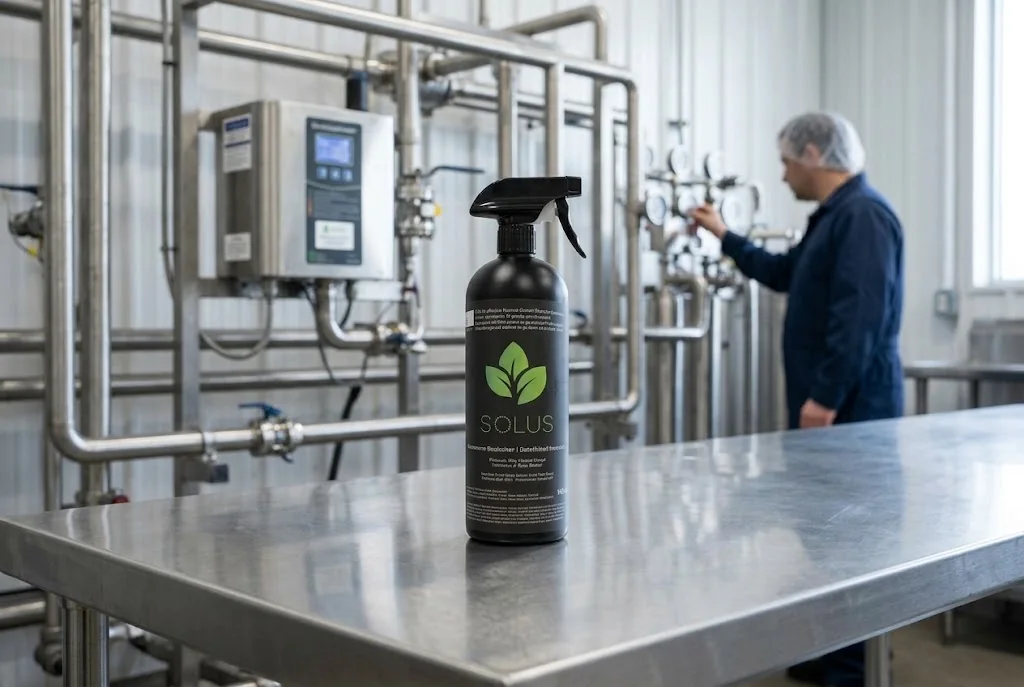
“Electrolyzed water” and “hypochlorous acid (HOCl)” are not opposites. Electrolyzed water is made by passing an electric current through a dilute salt solution; near-neutral electrolyzed water is HOCl-based — hypochlorous acid is its active species. The real question is not “which one,” but which kind of electrolyzed water: its pH, its stability, and whether it is authorized for the use you need. Solus’s Multi-Purpose Disinfectant is a near-neutral, HOCl-based solution made by electrolysis, holding Health Canada biocide market authorization no. 02557371.
For this guide’s place within the wider topic, see our hypochlorous acid resource hub.
Key takeaways
- Electrolyzed water is produced by electrolysis of a dilute salt (sodium chloride) solution; the chlorine species it contains depend on pH.
- At near-neutral pH, the dominant active species is hypochlorous acid (HOCl) — so near-neutral electrolyzed water and HOCl describe the same chemistry.
- Solus’s Multi-Purpose Disinfectant is made by electrolysis of a 0.5% sodium chloride solution and water (SDS §3), is near-neutral (pH 5.0–7.0, SDS §9) and carries a current label concentration of 367 ppm free available chlorine.
- Stability and authorization are what separate products: on-site do-it-yourself electrolyzed water can be unstable and unregulated, while Solus is a stabilized, Health Canada–authorized disinfectant (biocide market authorization no. 02557371).
- Follow the current label for authorized hard, non-porous surfaces, contact times and any required rinse.
On this page
- What is electrolyzed water?
- Is electrolyzed water the same as HOCl?
- Acidic, neutral and alkaline electrolyzed water
- Why stability and authorization matter
- Where Solus fits
- Frequently asked questions
The useful comparison isn’t “electrolyzed water or HOCl” — near-neutral electrolyzed water is HOCl. The real question is stability, pH, and what the product is authorized to do.
— Philippe Mathys, Solus
What is electrolyzed water?
Electrolyzed water (also called electrolyzed oxidizing water, or EOW) is produced by passing an electric current through a dilute solution of sodium chloride (salt) and water. The electrolysis generates chlorine-based oxidants in the water. Which oxidant dominates — chlorine gas, hypochlorous acid, or hypochlorite — depends chiefly on the pH of the resulting solution. That is why “electrolyzed water” on its own does not describe a single, fixed product.
Is electrolyzed water the same as HOCl?
At a near-neutral pH, the dominant active chlorine species in electrolyzed water is hypochlorous acid (HOCl). So near-neutral electrolyzed water and “HOCl solution” are describing the same active chemistry rather than two competing products. As the pH drops toward acidic, more chlorine gas forms; as it rises toward alkaline, hypochlorite (as in bleach) dominates and the solution behaves differently. The label pH therefore tells you far more than the words “electrolyzed water.”
Solus’s Multi-Purpose Disinfectant is a near-neutral, HOCl-based solution produced by electrolysis of a 0.5% sodium chloride solution and water (SDS §3), with a pH of 5.0 to 7.0 (SDS §9). Its current label concentration is 367 ppm free available chlorine.
For a product-to-product comparison, see HOCl vs bleach.
Acidic, neutral and alkaline electrolyzed water
Electrolysis can yield different streams. Acidic electrolyzed water has a low pH and a high oxidation-reduction potential; it contains more dissolved chlorine gas, can be more corrosive, and tends to be less stable. Near-neutral electrolyzed water is HOCl-dominant, is generally gentler on many materials, and is more shelf-stable when properly formulated. Alkaline electrolyzed water (the catholyte stream) is a cleaning/degreasing solution, not a disinfectant. For hard-surface disinfection, the near-neutral, HOCl-dominant stream is the relevant one — and it must still be used according to an authorized label.
Why stability and authorization matter
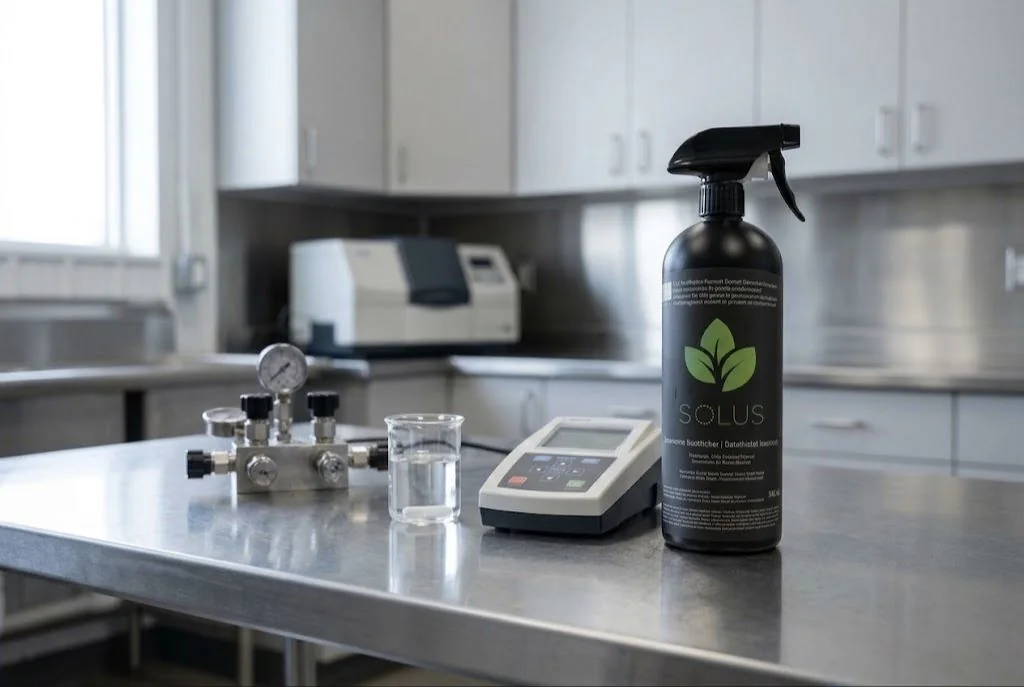
Two products can both be “electrolyzed water” and behave very differently. On-site, do-it-yourself electrolyzed water made with an inexpensive generator can vary in concentration and pH and can lose activity quickly, and it may not carry a Health Canada authorization for the uses claimed. A stabilized, manufactured HOCl product is formulated for a consistent concentration and a defined shelf life, and — for authorized claims — carries a Health Canada authorization.
Solus’s Multi-Purpose Disinfectant holds Health Canada biocide market authorization no. 02557371, with defined use areas (Food Premises, Hospital / Health Care Facilities, Domestic, and Institutional / Industrial). It is independently GLP-tested by Analytical Lab Group (report A30442 and the virucidal reports). The authorization and label — not the phrase “electrolyzed water” — define what the product may be used for.
For another disinfectant comparison, see HOCl vs Quaternary Ammonium (Quats).
Where Solus fits
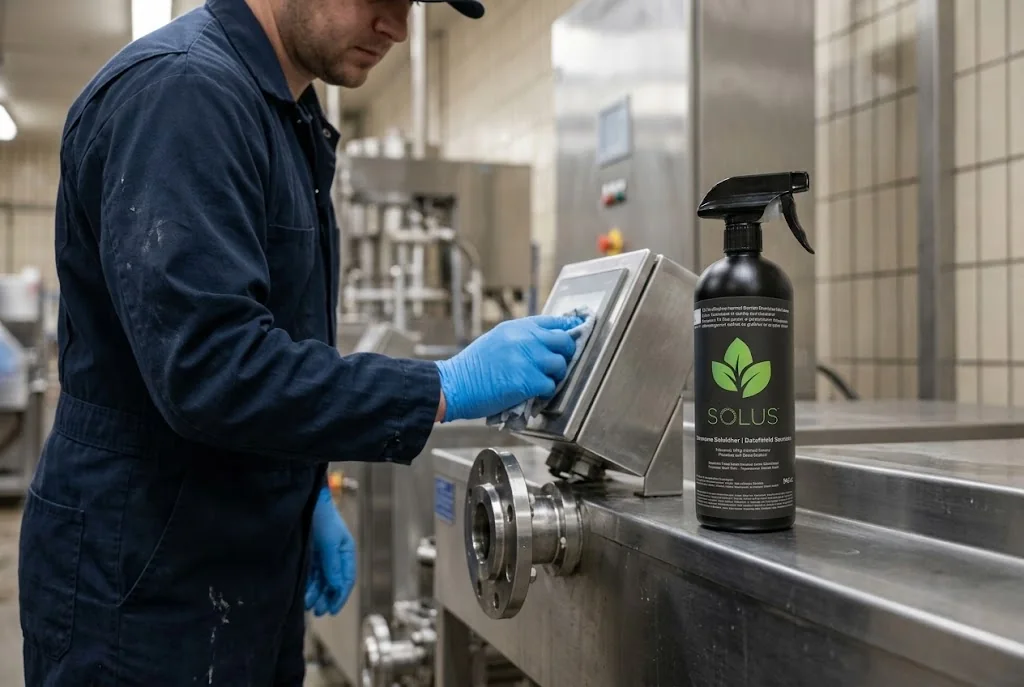
Solus is a near-neutral, stabilized, HOCl-based disinfectant produced by electrolysis — in other words, an electrolyzed-water product that is authorized, concentration-controlled and shelf-stable. It disinfects authorized hard, non-porous surfaces at a 367 ppm label concentration, and follows a label-led rinse for food-contact and direct-contact surfaces. Confirm every use against the current label and Safety Data Sheet.
Choosing a disinfectant chemistry? See the Solus product range and the documents and lab reports.
For handling context, see Is hypochlorous acid safe?.
Solus ships within Canada only.
Frequently asked questions
Is electrolyzed water the same as hypochlorous acid?
At near-neutral pH, yes in effect — the dominant active species in near-neutral electrolyzed water is hypochlorous acid (HOCl). At acidic or alkaline pH the chemistry shifts (more chlorine gas, or hypochlorite). The label pH is the key detail.
Is Solus electrolyzed water or HOCl?
Both descriptions fit. Solus’s Multi-Purpose Disinfectant is a near-neutral, HOCl-based solution produced by electrolysis of a 0.5% sodium chloride solution and water (SDS §3), pH 5.0–7.0, at a 367 ppm label concentration.
Is homemade electrolyzed water as good as a manufactured HOCl product?
Not necessarily. Do-it-yourself electrolyzed water can vary in concentration and pH and can lose activity quickly, and it may not carry a Health Canada authorization for the uses claimed. A stabilized, authorized product like Solus is concentration-controlled and holds biocide market authorization no. 02557371.
What concentration and pH is Solus?
The current label concentration is 367 ppm free available chlorine, and the SDS lists a pH of 5.0 to 7.0 (§9). Use the current label and SDS when documenting either value.
Which surfaces can it be used on?
Authorized hard, non-porous surfaces per the current label. Complete a potable-water rinse where the label recommends it for surfaces that may contact food, infants or toddlers, animals, feed or drinking water.
Final thoughts
The “electrolyzed water vs HOCl” question dissolves once you look at pH: near-neutral electrolyzed water is HOCl. What actually separates products is stability, concentration control and authorization. Solus’s Multi-Purpose Disinfectant is a near-neutral, stabilized, electrolysis-produced HOCl disinfectant with Health Canada biocide market authorization no. 02557371, a 367 ppm label concentration and documented GLP evidence — used label-led on authorized hard surfaces.
See also
Sources
- Solus SDS §3 (electrolysis of 0.5% NaCl), §9 (pH 5.0–7.0, ORP).
- Solus biocide market authorization no. 02557371 and current label.
- Analytical Lab Group GLP reports A30442, A30618, A31073.
- Chlorine speciation vs pH (HOCl dominant near-neutral; HOCl/OCl⁻ pKa ≈ 7.5): Health Canada, Guidelines for Canadian Drinking Water Quality — pH (>95% HOCl at pH 6.0; OCl⁻ dominant above pH 7.6); World Health Organization, Chlorine in Drinking-water (HOCl and OCl⁻ equal at pH 7.5, 25 °C); U.S. CDC, Chemical Disinfectants (HOCl is the principal microbicidal species).