
Direct answer
“Hospital-grade” describes a disinfectant authorized for use on hard, non-porous surfaces in health-care settings. Solus’s Multi-Purpose Disinfectant holds Health Canada biocide market authorization no. 02557371, which includes a Hospital / Health Care Facilities use area, and offers a lower-toxicity handling profile when used as directed. It is a surface disinfectant — not a skin antiseptic, sterilant, or medical-device reprocessing product — and every use follows the current label.
For an overview, see our hypochlorous acid (HOCl) guide.
Key takeaways
- Solus’s Multi-Purpose Disinfectant holds biocide market authorization no. 02557371, which includes a Hospital / Health Care Facilities use area.
- “Hospital-grade” refers to authorized hard-surface disinfection in a health-care setting, not sterilization, skin antisepsis, or medical-device reprocessing.
- The current label concentration is 367 ppm free available chlorine; the current label controls each surface, method, contact time, and rinse.
- The product offers a lower-toxicity handling profile when used as directed — not WHMIS-regulated (Solus SDS §15). For handling, follow the PPE requirements on the current label and SDS.
- The current label recommends a potable-water rinse for surfaces or objects that may directly contact infants or toddlers, animals, food, feed, or drinking water; the product is not applied to patients, skin, or wounds.
On this page
- What does “hospital-grade” actually mean?
- What is it authorized for in a health-care facility?
- Is a “non-toxic” hospital disinfectant realistic?
- What does the tested evidence show?
- How should staff use it on health-care surfaces?
- Where does the scope stop?
- Frequently asked questions
“Hospital-grade” isn’t a marketing badge — it points to an authorized use area for hard-surface disinfection in health care. The label, not the phrase, tells you what you can actually do.
— Philippe Mathys, Solus
What does “hospital-grade” actually mean?
“Hospital-grade” is commonly used to describe a disinfectant suitable for the environmental, hard, non-porous surfaces in a health-care setting. The dependable version of that phrase is regulatory, not promotional: it means the product is authorized for a Hospital / Health Care Facilities use area and its label defines the authorized surfaces and directions. It does not mean the product sterilizes, treats patients, or reprocesses medical devices, and it does not extend to every surface or organism in a facility.
For Solus’s Multi-Purpose Disinfectant, “hospital-grade” maps to a specific record: Health Canada biocide market authorization no. 02557371, which includes a Hospital / Health Care Facilities use area. The useful reading is narrow — authorized hard-surface disinfection in a health-care environment, performed exactly as the current label directs.
What is it authorized for in a health-care facility?
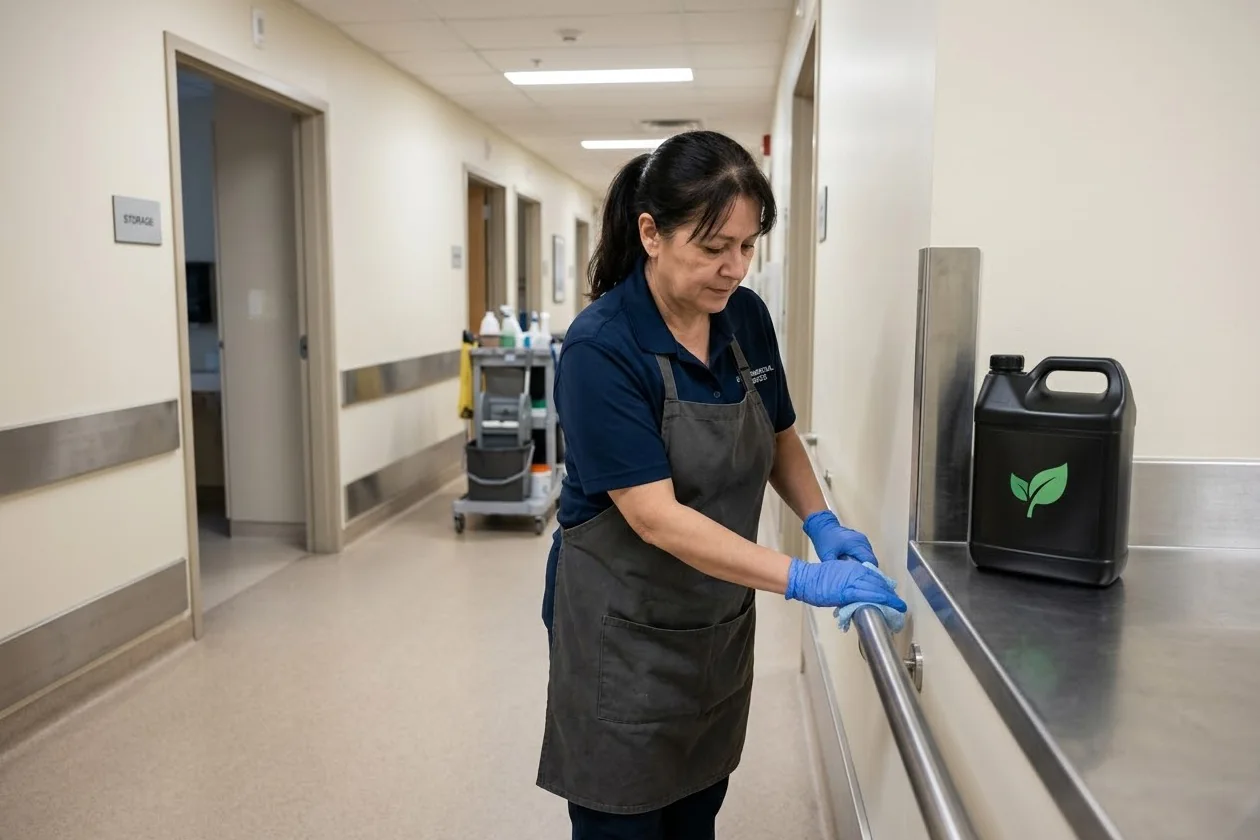
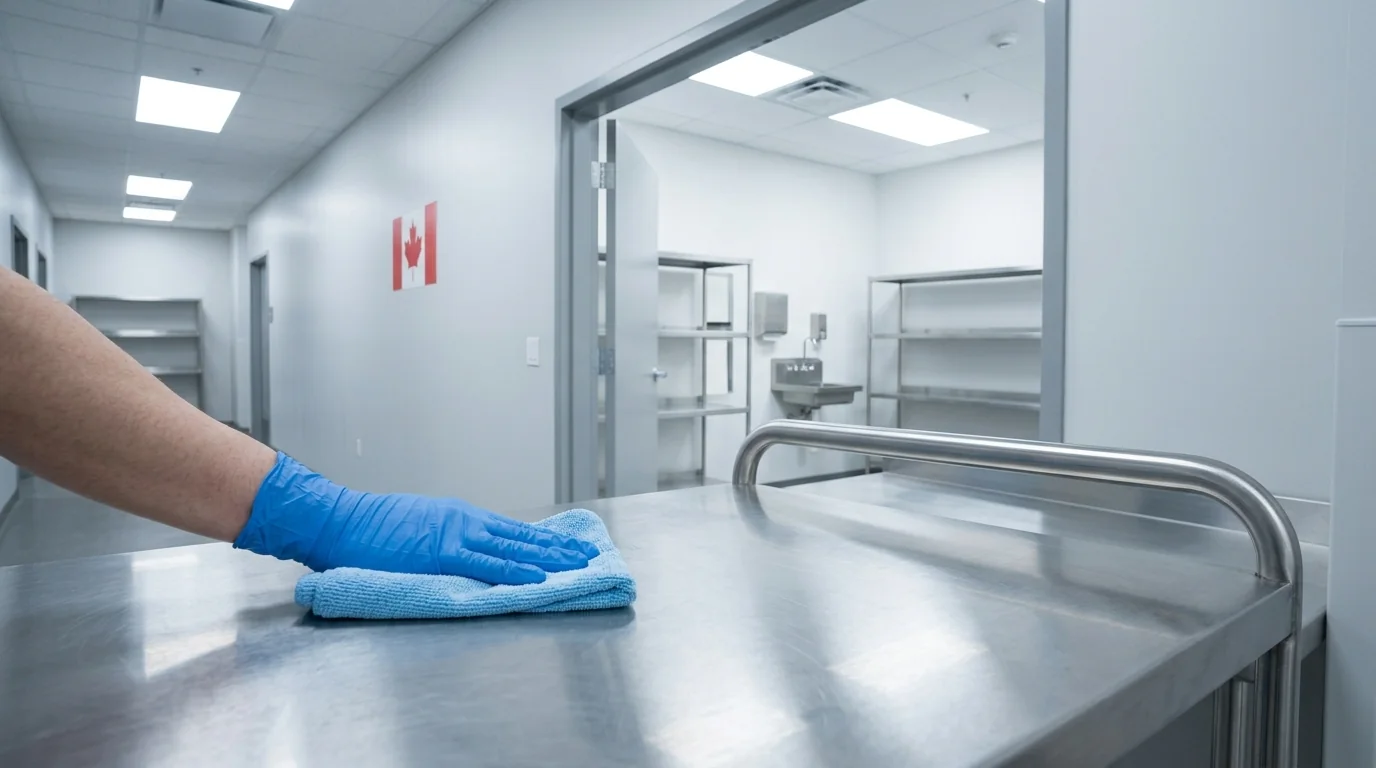
Authorization no. 02557371 includes a Hospital / Health Care Facilities use area alongside Food Premises, Domestic, and Institutional / Industrial. Within the health-care area, the current label defines the eligible hard, non-porous surfaces, the application method, the contact time the surface must stay wet, precautions, and any required potable-water rinse. Typical environmental targets in scope are surfaces such as counters, carts, rails, switch plates, and equipment exteriors — confirmed against the current label before use.
Two limits keep the claim defensible. First, a use area authorizes disinfection of eligible hard surfaces, not application to patients, skin, wounds, or the interior of medical devices. Second, the label governs each decision: high-level disinfection or sterilization of critical or semi-critical medical devices is a separate regulatory category and is out of scope for this product. Confirm the surface and method against the current label rather than relying on the phrase “hospital-grade.”
Is a “non-toxic” hospital disinfectant realistic?
Not in an absolute sense. A disinfectant is regulated precisely because it acts on microorganisms, so no product that disinfects is truly “non-toxic.” The useful question in a health-care setting is narrower: does the product have a lower-toxicity handling profile when used as directed? For Solus’s Multi-Purpose Disinfectant, the label and SDS support that framing — near-neutral pH and not regulated under WHMIS (§15). For handling, follow the PPE requirements on the current label and SDS.
Those are handling facts, not a safety guarantee. Médecins Sans Frontières describes hypochlorous acid generally as “non-toxic, non-corrosive” in its WHO Essential Medicines List submission; that is an attributed description of the compound, never a product claim for the Multi-Purpose Disinfectant. “Lower-toxicity when used as directed” is the honest, defensible wording a facility can stand behind. Follow the current label and SDS for ventilation and exposure precautions.
What does the tested evidence show?
The table below is the complete tested-efficacy set for this product. Do not extend it to organisms it does not list, and do not convert a pass/fail carrier test into a percentage.
| Organism | ATCC | Protocol | Contact time | Report |
|---|---|---|---|---|
| Staphylococcus aureus | 6538 | AOAC Use Dilution Method; Analytical Lab Group GLP | 10 minutes | A30442 |
| Salmonella enterica | 10708 | AOAC Use Dilution Method; Analytical Lab Group GLP | 10 minutes | A30442 |
| Pseudomonas aeruginosa | 15442 | AOAC Use Dilution Method; Analytical Lab Group GLP | 10 minutes | A30442 |
| Human Coronavirus 229E | VR-740 | Virucidal efficacy on inanimate surfaces; Analytical Lab Group GLP | 1 minute | A30618 |
| Influenza A H1N1 | VR-1469 | Virucidal efficacy on inanimate surfaces; Analytical Lab Group GLP | 1 minute | A31073 |
Data last verified: August 2026.
The AOAC Use Dilution Method is a pass/fail carrier test, reported without a percentage or log-reduction figure. The set includes organisms relevant to health-care environmental surfaces, but it does not cover C. difficile spores, mycobacteria, norovirus, or any organism not in the table; do not imply that it does. See the Solus documents page for available product documentation.
How should staff use it on health-care surfaces?
Build the routine around the label. Clean the surface first, apply the product as directed, keep the surface visibly wet for the full label contact time, then reset the space. Follow the PPE requirements on the current label and SDS, and use only in a well-ventilated area. Apply it to hard, non-porous surfaces only, and do not spray into the air. Record the surface, product, concentration (367 ppm), contact time, and any required rinse.
Handle food-contact and direct-contact points by material and use. The current label recommends rinsing with potable water after application on surfaces or objects that may directly contact infants or toddlers, animals, food, feed, or drinking water. Keep the product sealed, out of reach, and out of eyes, and do not apply it to patients, skin, or wounds. If a target falls outside the current label — a critical or semi-critical medical device, for instance — stop and use the appropriate product and process.

Where does the scope stop?
This page covers hard, non-porous environmental surface disinfection in a health-care setting under the Hospital / Health Care Facilities use area. It does not cover skin antisepsis, hand hygiene, wound care, patient application, sterilization, or high-level disinfection or reprocessing of medical devices. Soft and porous items are outside the procedure. Food-contact surfaces require the label’s potable-water rinse. If a surface, organism, or application falls outside the current label, stop and use the appropriate authorized product and process.
Specifying a disinfectant for health-care surfaces? See the Solus product range and match every surface and method to the current label.
Solus ships within Canada only.
Frequently asked questions
What makes a disinfectant “hospital-grade”?
In practical Canadian terms, it is authorized for a Hospital / Health Care Facilities use area for hard-surface disinfection. Solus’s Multi-Purpose Disinfectant holds biocide market authorization no. 02557371, which includes that use area. “Hospital-grade” refers to authorized surface disinfection, not sterilization, skin antisepsis, or medical-device reprocessing.
Is the Multi-Purpose Disinfectant non-toxic?
No product that disinfects is “non-toxic” in an absolute sense. Solus describes it as a lower-toxicity option when used as directed: not WHMIS-regulated (SDS §15). For handling, follow the PPE requirements on the current label and SDS. “Non-toxic, non-corrosive” appears only as MSF’s attributed description of hypochlorous acid, not as a product claim. Follow the current label.
Can it be used on medical devices or for sterilization?
No. This is an environmental hard-surface disinfectant. It does not sterilize and is not for high-level disinfection or reprocessing of critical or semi-critical medical devices, which are a separate regulatory category. Use a product and process authorized for that purpose.
What organisms has it been tested against?
The complete tested-efficacy table above lists the five organisms, ATCC identifiers, protocols, contact times and report numbers. It does not establish claims for organisms outside that table. See the available product documentation.
Do health-care surfaces need rinsing after disinfection?
The current label recommends a potable-water rinse for surfaces or objects that may directly contact infants or toddlers, animals, food, feed, or drinking water. The product is not applied to patients, skin, or wounds. Follow the label for each surface’s directions, contact time, and any required rinse.
Final thoughts
“Hospital-grade” is dependable when it points to an authorized use area rather than a slogan. Solus’s Multi-Purpose Disinfectant holds authorization no. 02557371 with a Hospital / Health Care Facilities use area, a 367 ppm label concentration, documented independent testing, and a lower-toxicity handling profile when used as directed. Clean first, follow the label, hold the contact time, rinse where required, and keep the product to authorized hard, non-porous surfaces.
See also
Sources
- Solus biocide market authorization no. 02557371 and current label (Hospital / Health Care Facilities use area).
- Solus SDS §8, §15.
- Analytical Lab Group GLP reports A30442, A30618, A31073.
- Médecins Sans Frontières, WHO Essential Medicines List submission (attributed “non-toxic, non-corrosive”).
