
Direct answer
“HACCP-compliant disinfectant” is not a Canadian product certification. A facility needs the right Health Canada authorization for its surface claim, a label-led sanitation procedure, and records showing cleaning, application, contact time, monitoring and corrective action. Solus’s Multi-Purpose Disinfectant holds biocide market authorization no. 02557371 for Food Premises; confirm every use against the current label.
For an overview, see our hypochlorous acid (HOCl) guide.
Key takeaways
- HACCP is a documented food-safety system; it does not issue a product seal called “HACCP approved.” The CFIA Food Safety Enhancement Program manual describes prerequisite programs, sanitation documentation, updates, and reassessment.
- Health Canada’s biocide transition guidance distinguishes hard-surface disinfectant claims from cleaner and other product claims and connects authorization to a biocide market authorization.
- The Multi-Purpose Disinfectant’s current label concentration is 367 ppm free available chlorine. Use the current label and FDS/SDS when documenting concentration; do not substitute a test-lot range in the SSOP.
- The complete efficacy record is in the table below. Each row pairs the organism, ATCC number, protocol, contact time, and report number.
- The current label for the Multi-Purpose Disinfectant says potable-water rinsing is recommended after application for surfaces or objects that may directly contact infants or toddlers, animals, food, feed, or drinking water. Do not describe the product as universally “no-rinse.”
On this page
- What does HACCP-compliant mean?
- What should a sanitation record contain?
- Which regulatory class applies?
- How Solus evidence fits
- How should food-contact rinsing be handled?
- Frequently asked questions
“HACCP-compliant” isn’t a stamp on a jug — it’s a documented routine: the right authorization, the right surface, the label contact time, and records that prove it.
— Philippe Mathys, Solus
What does “HACCP-compliant disinfectant” mean?
HACCP is a method for identifying hazards, selecting controls, monitoring them, and documenting what happened. The Canadian FSEP manual describes prerequisite programs as documented controls that are updated when the program changes and reassessed at least annually. That makes sanitation part of the system, not a marketing label on a chemical container.
The phrase can still be useful when it is explained carefully. A facility may choose a disinfectant that is authorized for the intended premises and surface, then place that product inside its sanitation standard operating procedure (SSOP). The phrase should not imply that CFIA, Health Canada, or HACCP has awarded a separate “approved product” certificate.
What should a sanitation record contain?
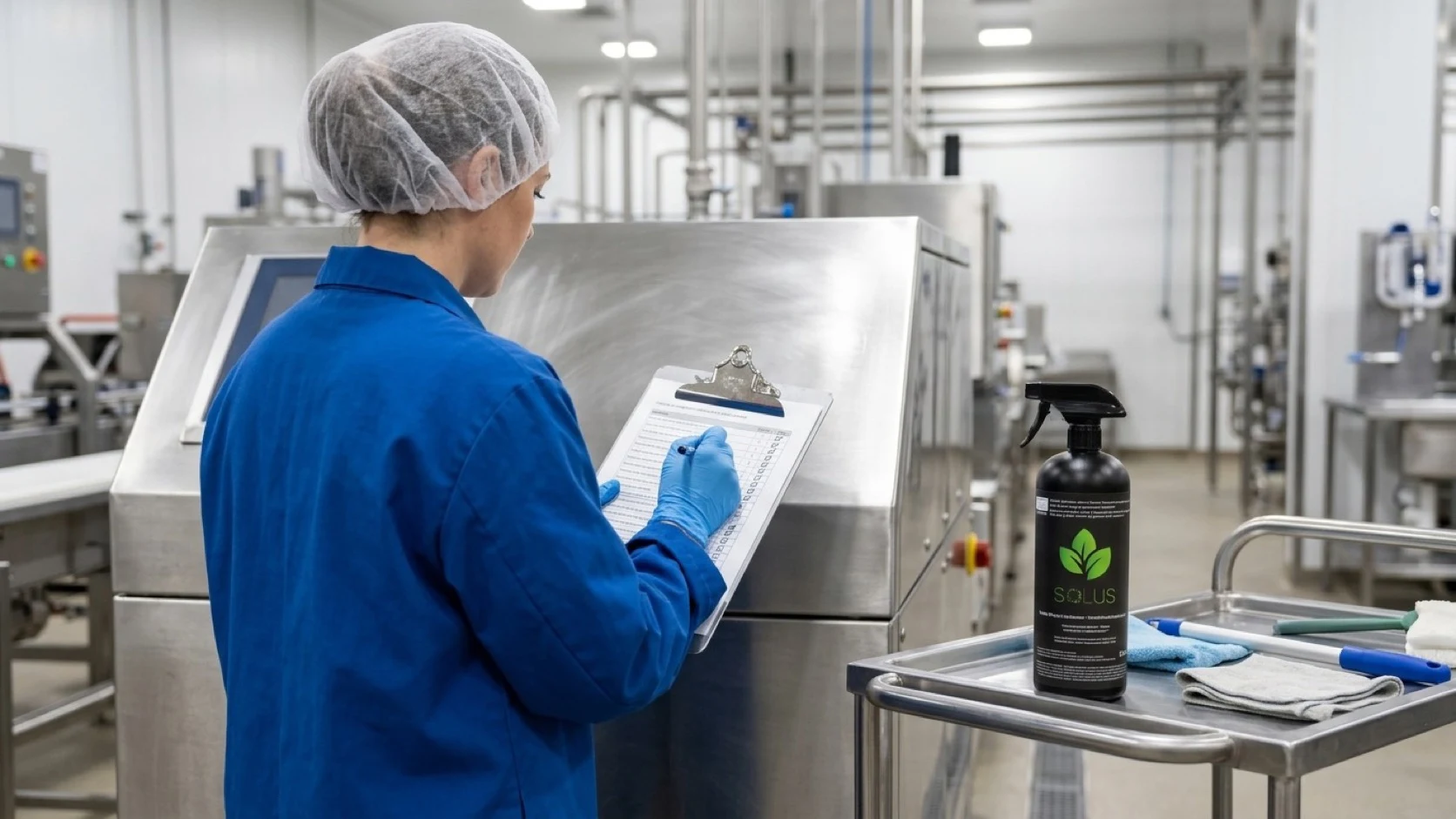
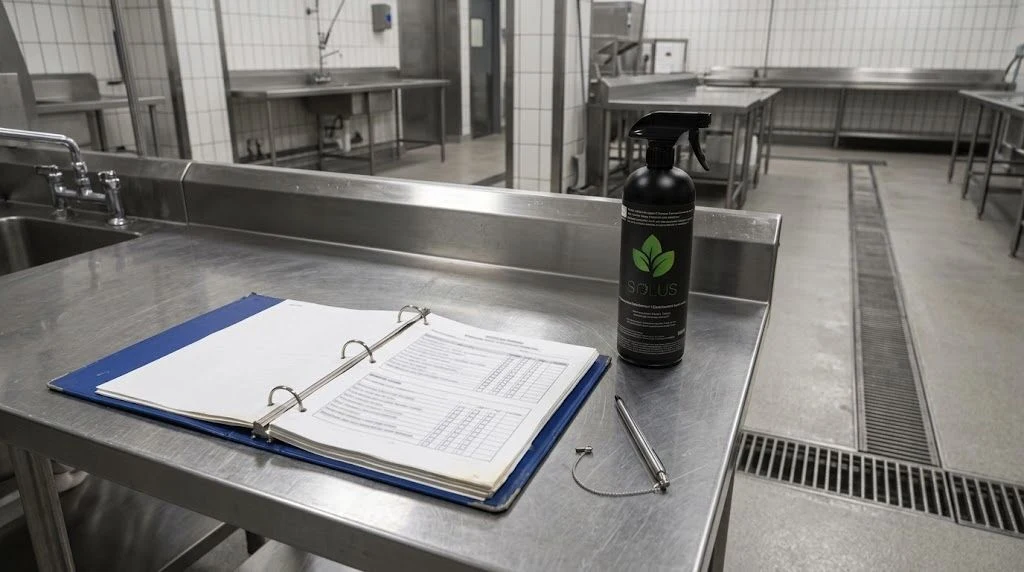
An auditor or internal food-safety manager normally needs a repeatable record trail. The SSOP should identify the surface or zone, the pre-cleaning step, the product and label concentration, the application method, the required wet contact time, the person responsible, the monitoring check, and the corrective action if the check failed. Keep the current label and Solus documents and biocide authorization records with that procedure.
During an audit, a reviewer can select one completed production shift and trace a single sanitation task from beginning to end. The zone code on the log should match the master schedule. The pre-clean entry shows that visible soil was removed before disinfection. The product entry identifies the current label, the 367 ppm label/FDS concentration, and the application method. Start and finish times then show whether the surface remained wet for the full label contact time. A supervisor’s monitoring entry confirms the check, while the corrective-action field explains what happened if the surface dried early, a required rinse was missed, or a step was not recorded. The auditor should be able to move from each entry to the supporting label, FDS/SDS, training record, or corrective note without guessing.
Consider a stainless-steel preparation table that dries before the full label contact time. The worker records the zone, the original application time, and the failed wet-time check instead of erasing the first attempt. The corrective entry states that the product was reapplied according to the label and that the full contact period was restarted. If the surface became soiled again, the worker repeats the required pre-cleaning steps before reapplication. After the corrected cycle, the worker completes the potable-water rinse wherever the label calls for it and records the finish time. The supervisor then compares the two entries, confirms that the corrected surface remained wet for the required period, verifies the rinse entry where applicable, and signs the corrective action closed. The linked records show both the deviation and the completed response.
The record should also distinguish food-contact surfaces from non-food-contact surfaces. A product can be authorized for a Food Premises use area without being authorized for direct application to food. The words “surface” and “food” must not be treated as interchangeable.
Which regulatory class applies in Canada?
Health Canada’s current biocide framework governs authorized uses and label claims for surface disinfectants. For a food plant, the useful question is not “Is this HACCP approved?” but “Does this product’s current label authorize the surface and premises we intend to treat?”
For purchasing checks, see our guide to buying HOCl in Canada.
The regulatory logic follows the intended object of application. A Food Premises authorization can cover use on an authorized hard, non-porous surface in a food-handling environment; it does not turn the food itself into an authorized treatment surface. For example, a hard, non-porous packaging-line guard and the unpackaged food moving beside it are different targets. The guard may be treated only when its surface and intended use are covered by the current label; that permission does not extend to the food beside it. Direct application to produce, meat, or another food would require an explicit food-use authorization and cannot be inferred from the premises category or authorization number.
| Class | Practical meaning | Review question |
| Cleaner | Removes soil without an antimicrobial claim | Does the SSOP assign a separate cleaning step? |
| Other surface biocide claim | Has a product-specific authorized surface claim | Is the product authorized for that exact claim? |
| Disinfectant | Carries a hard-surface disinfectant representation | Do the biocide authorization and label cover the intended premises and surface? |
Data last verified: August 2026 from the linked Canadian guidance.
What does the Solus evidence document?
The following is the single complete efficacy table for the Multi-Purpose Disinfectant.
| Organism | ATCC | Protocol | Contact time | Report |
| *Staphylococcus aureus* | ATCC 6538 | AOAC Use Dilution Method; Analytical Lab Group GLP | 10 minutes | A30442 |
| *Salmonella enterica* | ATCC 10708 | AOAC Use Dilution Method; Analytical Lab Group GLP | 10 minutes | A30442 |
| *Pseudomonas aeruginosa* | ATCC 15442 | AOAC Use Dilution Method; Analytical Lab Group GLP | 10 minutes | A30442 |
| Human Coronavirus 229E | ATCC VR-740 | Virucidal efficacy for use on inanimate environmental surfaces; Analytical Lab Group GLP | 1 minute | A30618 |
| Influenza A (H1N1) | ATCC VR-1469 | Virucidal efficacy for use on inanimate environmental surfaces; Analytical Lab Group GLP | 1 minute | A31073 |
The table is a documentation aid, not a blanket promise for every organism, surface, dilution, or application method. The label and lab reports/biocide authorization documents control the use decision.
How should food-contact rinsing be handled?
The current label for the Multi-Purpose Disinfectant states that rinsing with potable water is recommended after application for surfaces and/or objects that may come into direct contact with infants or toddlers, animals, food, feed, or drinking water. The SSOP should preserve that label-led step and must not describe the product as universally “no-rinse.”
Use 367 ppm when documenting the current label concentration. The SSOP should rely on the current label and FDS/SDS rather than reproducing a separate test-lot concentration.
How does the Multi-Purpose Disinfectant fit a food plant’s program?
Solus can be presented as a documentable option within a facility’s own sanitation program: identify the Food Premises authorization, attach the current label and FDS/SDS, specify the surface, apply the product as directed, record the contact time, and complete the verification step. For product and documentation review, see the Solus product range and Solus documents.
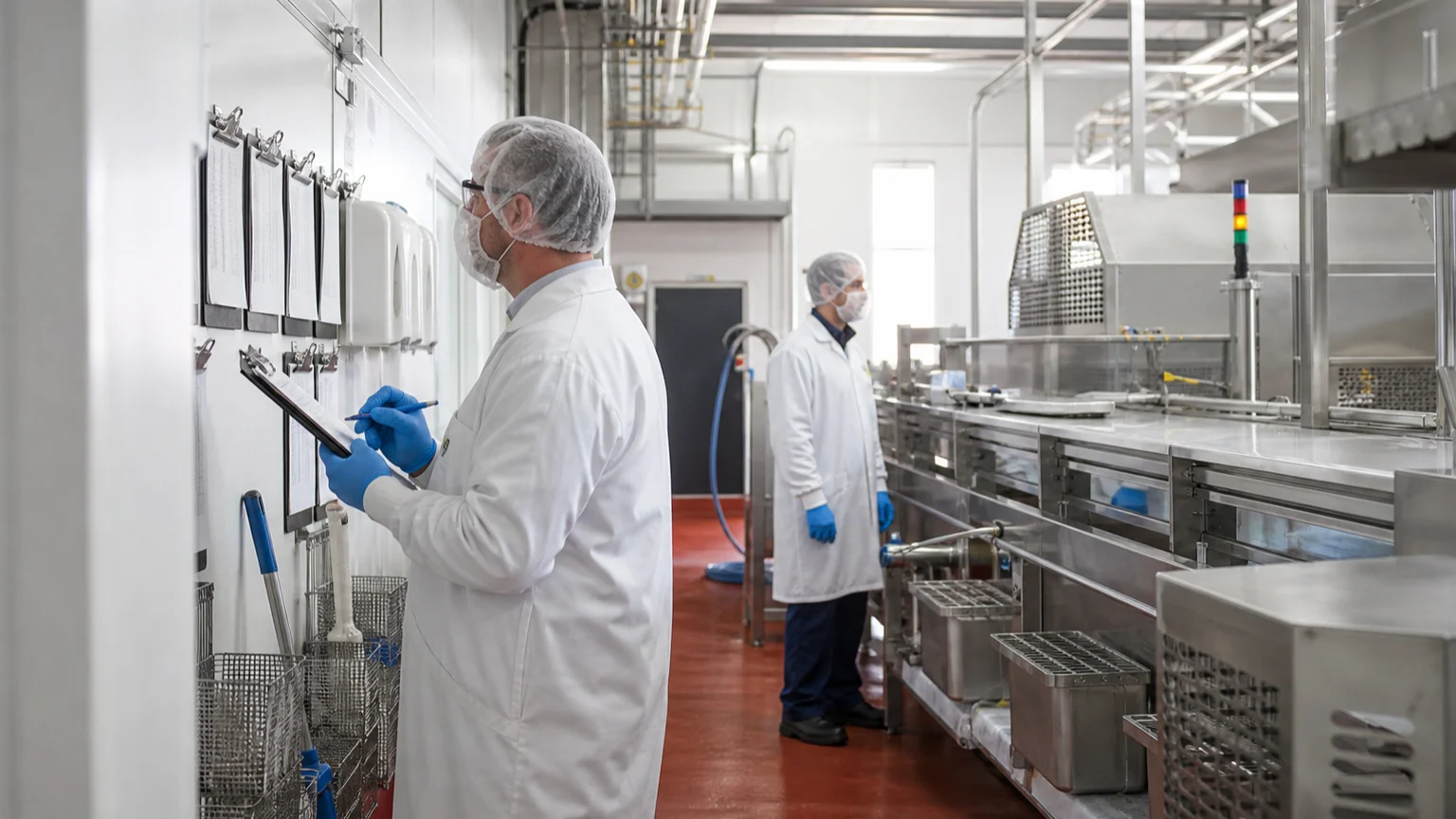
A mini-SSOP could follow one removable filler head identified as Zone F-07. Once the equipment is released for sanitation, the worker removes the component according to the equipment procedure, clears product residue, washes with the facility’s approved detergent, rinses away detergent and loosened soil, and inspects the hard surface. If the current label and facility SSOP cover that component, the worker applies the Multi-Purpose Disinfectant as directed, records the product and 367 ppm label/FDS concentration, and maintains the full label contact time. Where the label directs or recommends a potable-water rinse for the food-contact component, that rinse is completed and logged before reassembly. A supervisor verifies the cleaned component, contact-time record, applicable rinse entry, and any exception before signing Zone F-07 complete.
The copy must avoid broad, unqualified safety or toxicology adjectives. If the WHO/MSF literature is discussed, it must remain an attributed description of the compound in that source and not become an unqualified Solus claim. The label’s actual precautions and the FDS/SDS should govern handling language.
Frequently asked questions
Is “HACCP-approved disinfectant” a Canadian certification?
No. HACCP is a food-safety system, not a product-certification mark. A facility documents sanitation as a prerequisite program and verifies that its selected product is authorized for the intended surface and premises. Keep the current label, SSOP, monitoring record, and corrective-action record together.
What does a food plant need to document?
Document the zone, pre-cleaning step, product and concentration, application method, required wet contact time, responsible worker, verification check, potable-water rinse step where the label recommends it, and any corrective action. Keep the current authorized biocide label and FDS/SDS with the SSOP.
What concentration appears on the Multi-Purpose Disinfectant label?
The current label figure is 367 ppm free available chlorine. Use the current label and FDS/SDS when documenting concentration; do not substitute a test-lot range in the SSOP.
Does a Food Premises biocide authorization authorize use on food?
No. The claim concerns authorized hard surfaces in a food-handling environment, not direct treatment of food. The SSOP should name the surface, follow the label, and include the recommended potable-water rinse after application where a surface or object may directly contact food, feed, or drinking water.
Where can I check Solus documentation?
Use the Solus documents page for the biocide authorization, FDS/SDS, and laboratory material, and use the Solus product range for product context. At publication, verify every linked document, its date, and its current version before relying on it in an SSOP or audit file.
Food plants that share staff, kitchens, or sanitation oversight with other facility types can extend the same label-led documentation discipline by consulting healthcare environmental-disinfection guidance and daycare high-touch-surface routines. For handling and scope questions, review HOCl safety for surface disinfection.
Final thoughts
HACCP compliance is a documented pathway: the right regulatory class, the right surface, a label-led procedure, and records that show the procedure was followed. This article should help a food-safety manager ask those practical questions without turning “HACCP-compliant” into an invented certification or a product safety guarantee.
See also
- Commercial kitchen disinfection guide
- HOCl vs bleach for Canadian facilities
- Solus product range
- Solus documents and biocide authorization records
- Hotel and hospitality hygiene
Sources
- Canadian Food Inspection Agency — Food Safety Enhancement Program Manual
- Health Canada — Transition to the Biocides Regulations
- Health Canada — biocide labelling requirements
- Solus authorization records — confirm current versions at publication.