
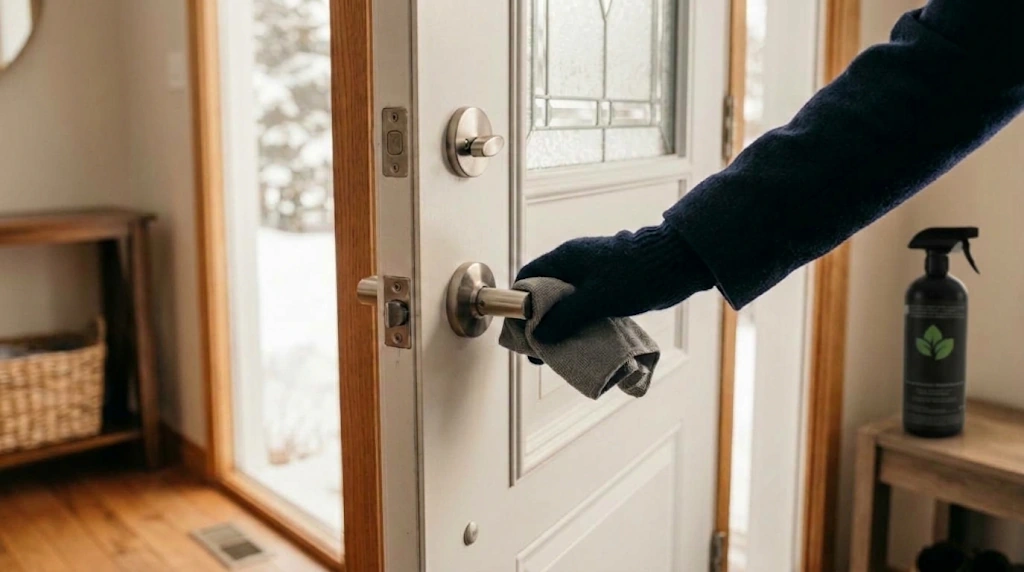
Direct answer
Cold and flu season raises indoor transmission through shared, high-touch surfaces. Disinfecting those surfaces matters most during this period. Solus's Multi-Purpose Disinfectant holds Health Canada biocide market authorization no. 02557371 at 367 ppm free available chlorine. In GLP testing it showed virucidal efficacy against Human Coronavirus 229E and Influenza A H1N1 at 1 minute. It disinfects hard, non-porous surfaces only, always following the current label.
For an overview, see our hypochlorous acid (HOCl) guide.
Key takeaways
- Cold and flu viruses spread partly through contaminated high-touch surfaces indoors.
- Solus's Multi-Purpose Disinfectant holds biocide market authorization no. 02557371 at 367 ppm free available chlorine.
- The product showed virucidal efficacy against Human Coronavirus 229E and Influenza A H1N1, each at 1 minute, in GLP testing by Analytical Lab Group.
- Tested efficacy covers only the listed organisms; it does not include rhinovirus, RSV, norovirus, or SARS-CoV-2.
- The product disinfects hard, non-porous surfaces only; it is not a hand sanitizer or skin antiseptic.
On this page
- Why does cold and flu season raise surface transmission?
- Which high-touch surfaces should you prioritize?
- What has Solus's disinfectant been tested against?
- How do you disinfect high-touch surfaces correctly?
- Is a lower-toxicity disinfectant practical for homes and busy spaces?
- Where does the scope stop?
- Frequently asked questions
Winter is when shared surfaces do the most work. The label tells you which surfaces you can treat and how — the season just makes the routine matter more. — Philippe Mathys, Solus
Why does cold and flu season raise surface transmission?
Respiratory viruses circulate more in the colder months, when people spend longer indoors, closer together, and share the same rooms and objects. Contaminated hands touch a surface, the next person touches it, and the surface becomes a link in the chain. That is why routine surface disinfection earns its place in a winter plan, alongside hand hygiene and ventilation — not as a replacement for them, but as the part you can control on the objects everyone touches.
Surface disinfection is only one layer, and it works best when it is targeted. Spraying every wall accomplishes little; treating the handles, switches, and shared equipment that many hands reach does far more for the effort. The goal is a short, repeatable routine on the right surfaces, performed the way the product's label directs. A disinfectant interrupts surface transmission only when it is left on the surface for its full contact time, so the routine matters as much as the product. The sections below set out which surfaces to prioritize and how to treat them correctly.
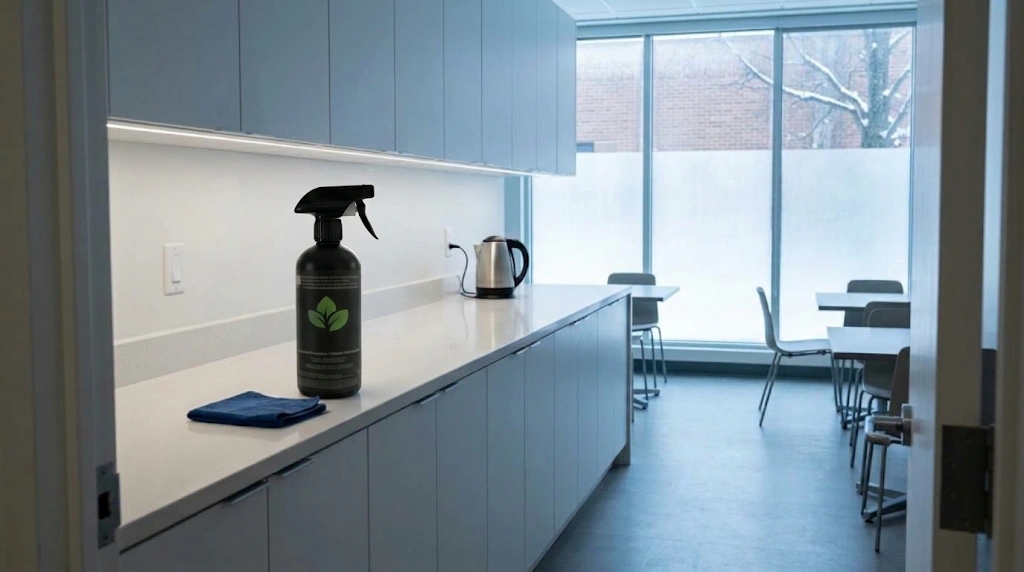
Which high-touch surfaces should you prioritize?
Prioritize the hard, non-porous surfaces that the most hands reach between cleanings. In a home, that means door handles, light switches, faucet handles, railings, remote controls, and kitchen and bathroom counters. In an office, reception desk, shared keyboards and phones, elevator buttons, and break-room counters. In a facility, carts, rails, switch plates, counters, and equipment exteriors. These are the points where a quick, frequent wipe does the most, because they combine many touches with a surface a disinfectant can actually work on.
Keep two limits in mind as you build the list. First, this is a hard-surface disinfectant: soft furnishings, fabrics, and porous materials are outside the procedure and need a different approach. Second, every surface still follows the current label for method, contact time, and any required rinse. For food-contact points, the label calls for a potable-water rinse after application, so keep those surfaces on a separate step. Matching the right routine to each surface is the difference between a plan that works and one that only looks busy. If you want the science behind why stabilized hypochlorous acid suits frequent, lighter-touch routines, our guide on whether hypochlorous acid is safe covers the handling profile in detail.
What has Solus's disinfectant been tested against?
The table below is the complete tested-efficacy set for this product. Do not extend it to organisms it does not list, and do not convert a pass/fail carrier test into a percentage.
| Organism | ATCC | Protocol | Contact time | Report |
|---|---|---|---|---|
| Human Coronavirus 229E | VR-740 | Virucidal efficacy on inanimate surfaces; Analytical Lab Group GLP | 1 minute | A30618 |
| Influenza A H1N1 | VR-1469 | Virucidal efficacy on inanimate surfaces; Analytical Lab Group GLP | 1 minute | A31073 |
| Staphylococcus aureus | 6538 | AOAC Use Dilution Method; Analytical Lab Group GLP | 10 minutes | A30442 |
| Salmonella enterica | 10708 | AOAC Use Dilution Method; Analytical Lab Group GLP | 10 minutes | A30442 |
| Pseudomonas aeruginosa | 15442 | AOAC Use Dilution Method; Analytical Lab Group GLP | 10 minutes | A30442 |
Data last verified: October 2026.
For a winter context, the two most relevant rows are the viruses: the product demonstrated virucidal efficacy against Human Coronavirus 229E and Influenza A H1N1, each at a one-minute contact time, in GLP testing by Analytical Lab Group. Human Coronavirus 229E is one of the coronaviruses associated with common colds, and Influenza A H1N1 is a seasonal influenza strain — so the tested set maps onto two viruses that circulate in winter. The AOAC Use Dilution Method rows are reported as pass/fail, without a percentage or log-reduction figure. What the table does not do is equally important: it does not establish efficacy against rhinovirus, RSV, norovirus, or SARS-CoV-2, none of which were tested. Treat the listed organisms as the claim and nothing beyond it. The full records, numbers, and report references are on the certifications and test data page.
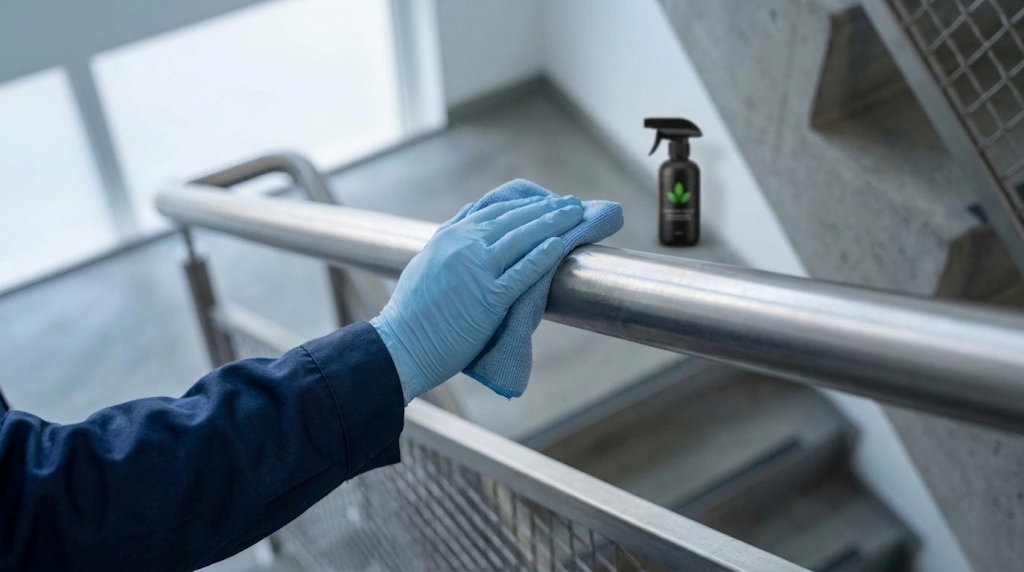
How do you disinfect high-touch surfaces correctly?
Build the routine around the label, because contact time is what makes disinfection work. Clean the surface first to remove visible soil, apply the product as the label directs, and keep the surface visibly wet for the full label contact time before wiping or letting it dry. A surface that is sprayed and immediately wiped has not been disinfected — it has been cleaned. During a busy winter week, a short, scheduled pass on the priority surfaces two or three times a day does more than an occasional deep clean, precisely because high-touch surfaces are re-contaminated quickly.
Handle food-contact and direct-contact points by their use. The current label recommends rinsing with potable water after application on surfaces or objects that may directly contact infants or toddlers, animals, food, feed, or drinking water, so keep those on a separate rinse step. Apply the product only to hard, non-porous surfaces, use it in a well-ventilated area, and do not spray it into the air or onto people. For handling, follow the PPE requirements on the current label and SDS. Keep the container sealed and out of reach between uses. If you are weighing it against a stronger chlorine product for winter cleaning, see how HOCl compared with bleach differs in handling and use.
Is a lower-toxicity disinfectant practical for homes and busy spaces?
In an absolute sense, no disinfectant is "non-toxic," because a product is regulated precisely because it acts on microorganisms. The practical question for a home or a busy workplace is narrower: does the product have a lower-toxicity handling profile when used as directed, so staff and family members can keep a frequent routine going through the season? For Solus's Multi-Purpose Disinfectant, the label and SDS support that framing — a near-neutral pH and not regulated under WHMIS (SDS §15). Those are handling facts, not a safety guarantee, and they do not remove the need to follow the label.
Médecins Sans Frontières describes hypochlorous acid generally as "non-toxic, non-corrosive" in its WHO Essential Medicines List submission; that is an attributed description of the compound, never a product claim for the Multi-Purpose Disinfectant. The honest, defensible reading is "lower-toxicity when used as directed," which is what makes a frequent winter routine realistic in shared spaces: a product people are willing to use often, on the surfaces that matter, exactly as the label directs. Follow the current label and SDS for ventilation and exposure precautions, and keep every use inside the authorized hard-surface scope.
Where does the scope stop?
This guide covers routine disinfection of hard, non-porous environmental surfaces during cold and flu season, under the product's authorized use areas. It does not cover hand hygiene, skin antisepsis, or any application to people: this is a surface disinfectant, not a hand sanitizer, and it is never applied to hands, skin, or faces. It does not sterilize, and it is not for high-level disinfection or reprocessing of medical devices, which are a separate regulatory category.
The tested-efficacy table is also the boundary of the virus claims. The product was tested against Human Coronavirus 229E and Influenza A H1N1; it was not tested against rhinovirus, RSV, norovirus, or SARS-CoV-2, so do not read those into it. Soft and porous items are outside the procedure, and food-contact surfaces require the label's potable-water rinse. If a surface, organism, or application falls outside the current label, stop and use the appropriate authorized product and process.
Planning a winter surface routine for a home or facility? See the Solus product range and match every surface and method to the current label.
Solus ships within Canada only.
Frequently asked questions
Does Solus's disinfectant work against cold and flu viruses?
It was tested against two: Human Coronavirus 229E and Influenza A H1N1, each at a one-minute contact time, in GLP testing by Analytical Lab Group. Those are the only virus claims. It was not tested against rhinovirus, RSV, norovirus, or SARS-CoV-2. Follow the current label for contact time and use.
Can I use it on my hands during cold and flu season?
No. This is a hard-surface disinfectant, not a hand sanitizer or skin antiseptic. It is never applied to hands, skin, or faces. Use it on hard, non-porous surfaces only, and keep hand hygiene as a separate step. Follow the current label for every application.
Does it protect against COVID-19 or norovirus?
No. The product was not tested against SARS-CoV-2 or norovirus, so no claim is made for either. Its tested virus set is limited to Human Coronavirus 229E and Influenza A H1N1. Do not extend the results to organisms outside the tested-efficacy table.
How long does the surface need to stay wet?
Follow the contact time on the current label. In testing, the two viruses were treated at a one-minute contact time and the bacteria at ten minutes. Keep the surface visibly wet for the full label contact time; a surface wiped dry immediately has not been disinfected.
Do I need to rinse after disinfecting?
The current label recommends a potable-water rinse for surfaces or objects that may directly contact infants or toddlers, animals, food, feed, or drinking water. For other hard surfaces, follow the label's directions. Keep food-contact surfaces on a separate rinse step.
Final thoughts
Cold and flu season does not call for a new product so much as a reliable routine on the right surfaces. Solus's Multi-Purpose Disinfectant holds biocide market authorization no. 02557371 at 367 ppm, with documented virucidal testing against Human Coronavirus 229E and Influenza A H1N1 at one minute and a lower-toxicity handling profile when used as directed. Clean first, apply the product, hold the full contact time, rinse where the label requires, and keep every use on authorized hard, non-porous surfaces.
See also
- Hospital-grade disinfectant
- Is hypochlorous acid safe?
- HOCl vs bleach
Sources
- Solus biocide market authorization no. 02557371 and current label (use areas; potable-water rinse directions; 367 ppm free available chlorine).
- Solus SDS §15 (WHMIS classification); SDS for handling and exposure precautions.
- Analytical Lab Group GLP reports A30618 (Human Coronavirus 229E), A31073 (Influenza A H1N1), A30442 (bacterial set).
- Médecins Sans Frontières, WHO Essential Medicines List submission (attributed "non-toxic, non-corrosive" for hypochlorous acid).