
Direct answer
Daycares disinfect high-touch surfaces to slow illness spread. For hard-surface disinfection, follow the PPE requirements on the current product label and SDS. Solus’s Multi-Purpose Disinfectant holds Health Canada biocide market authorization no. 02557371. The disinfectant is not regulated under WHMIS. Match every use to the current label.
For an overview, see our hypochlorous acid (HOCl) guide.
Key takeaways
- Solus’s Multi-Purpose Disinfectant holds Health Canada biocide market authorization no. 02557371, which includes institutional use areas.
- The Multi-Purpose Disinfectant is not regulated under WHMIS, is not dangerous goods for transport in Canada, and must be used according to the current label. For handling, follow the PPE requirements on the current product label and SDS; use eye protection where splashing is possible and gloves for prolonged or repeated contact or sensitive skin (Solus SDS §§8, 14, 15).
- The Multi-Purpose Disinfectant passed the AOAC Use Dilution Method against Salmonella enterica (ATCC 10708) in 10 minutes, GLP-tested by Analytical Lab Group (report A30442).
- The current label concentration is 367 ppm free available chlorine.
- Médecins Sans Frontières calls hypochlorous acid “non-toxic, non-corrosive” in the WHO Essential Medicines List submission — a description of the compound, not a product claim for the Multi-Purpose Disinfectant.
On this page
- Which daycare surfaces need disinfecting?
- Is a “non-toxic” disinfectant realistic for childcare?
- How should staff disinfect around children?
- What does the tested evidence show?
- How often should a daycare disinfect?
- Where does the scope stop?
- Frequently asked questions
In a daycare the goal isn’t a stronger chemical — it’s a surface routine staff can follow every day, on the surfaces children touch most, exactly as the label directs.
— Philippe Mathys, Solus
Which surfaces in a daycare need disinfecting?
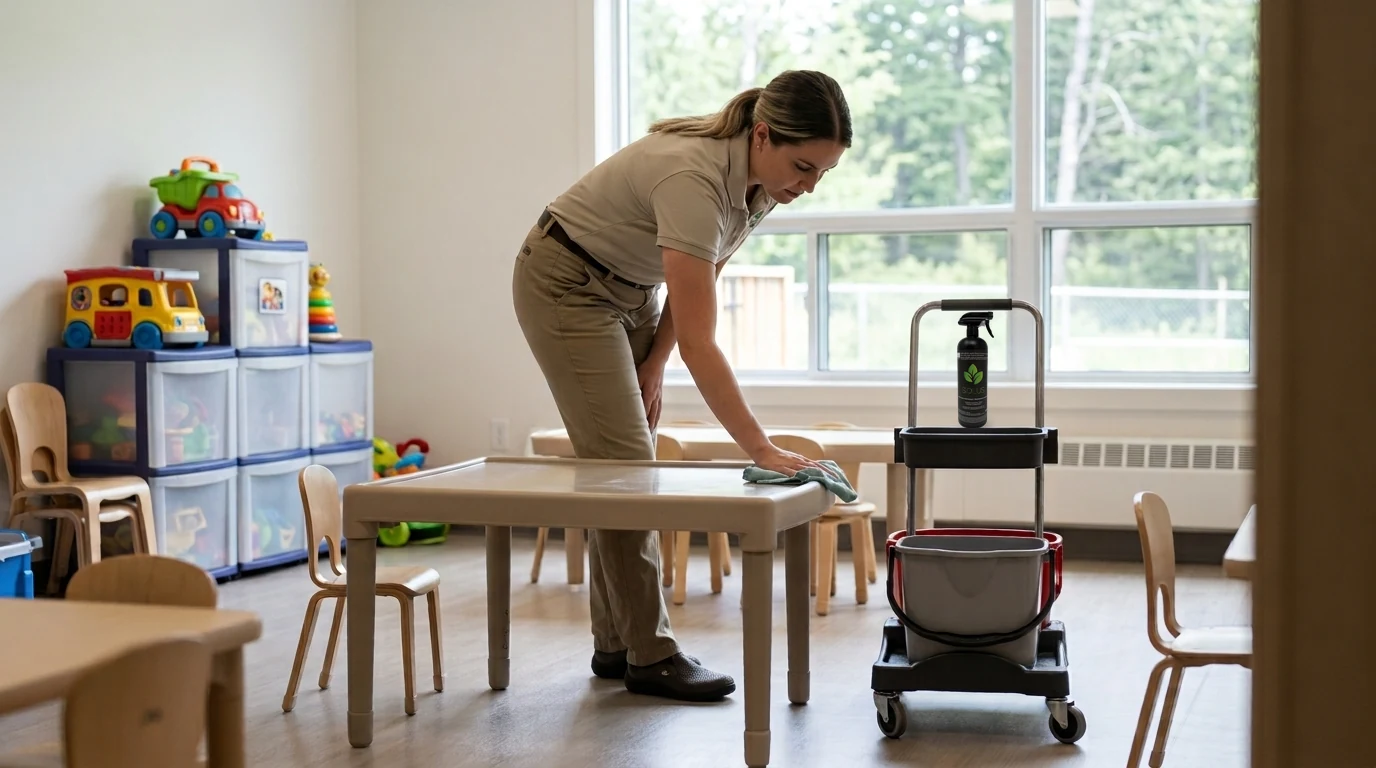
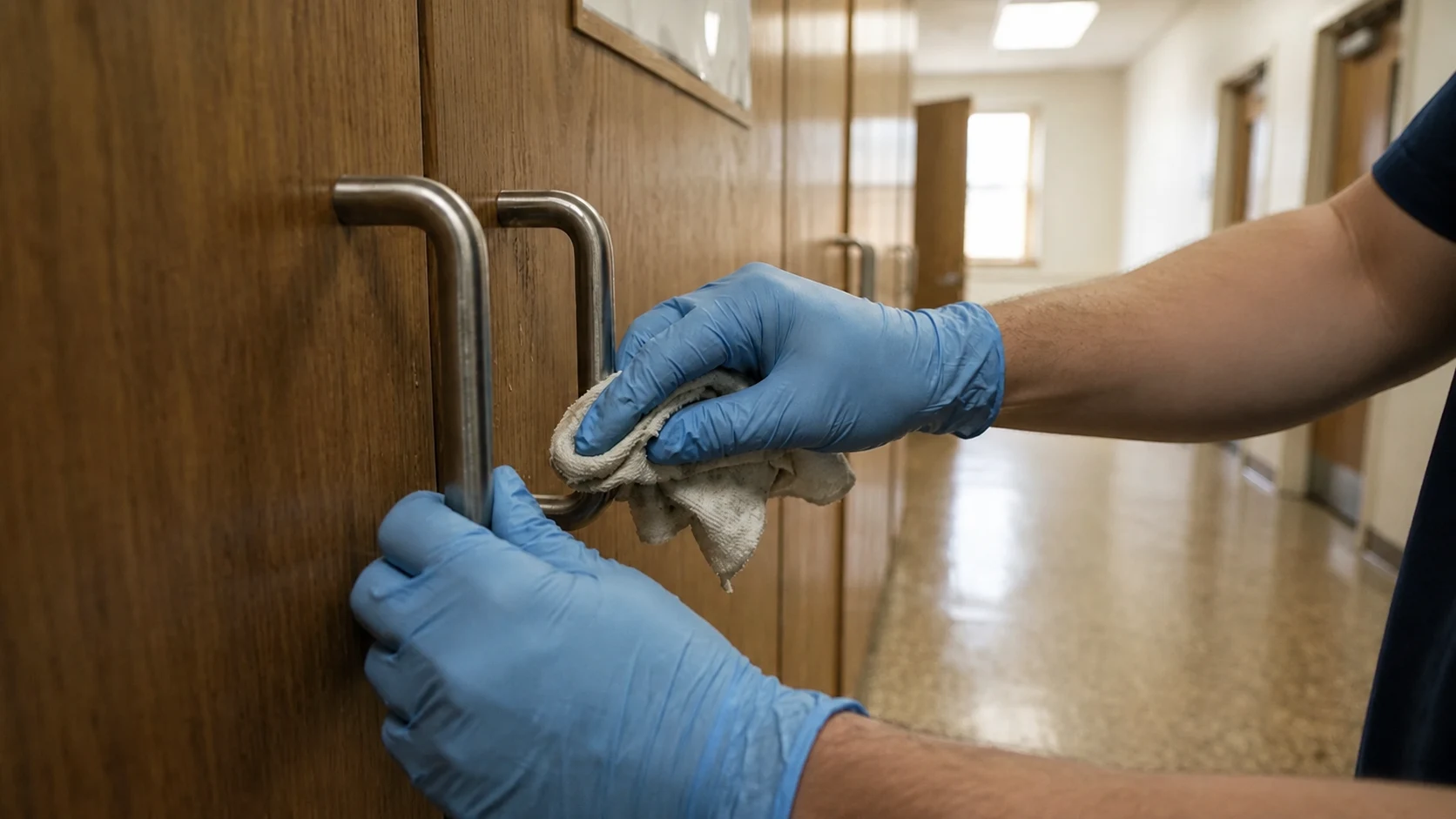
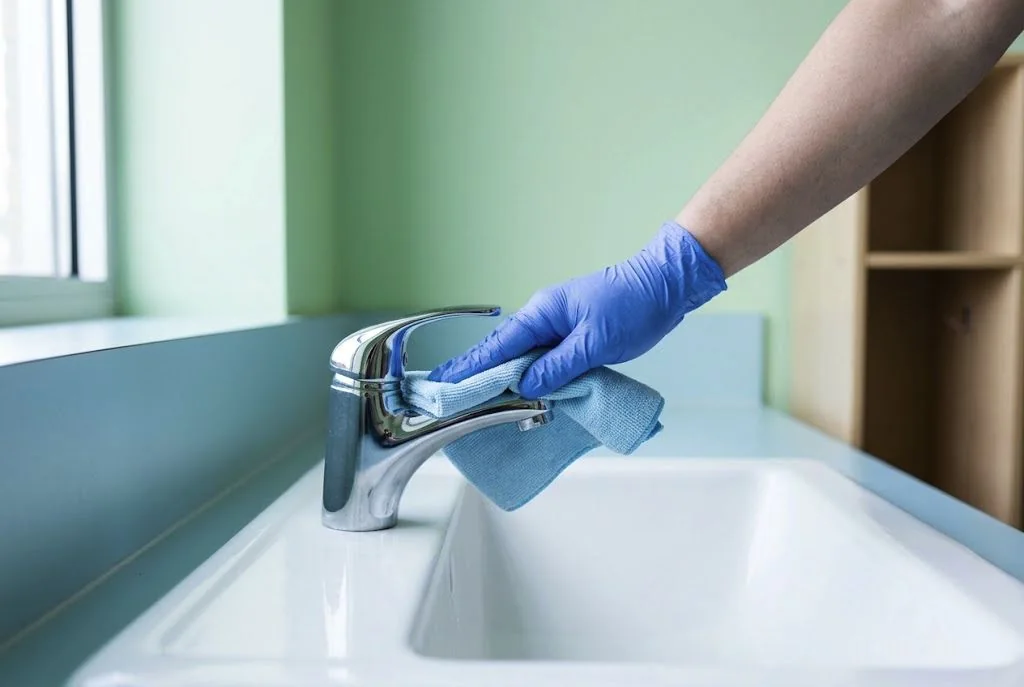
Start by separating cleaning from disinfection: remove visible soil first, then disinfect the hard, non-porous surfaces that hands touch most. In a childcare room, that usually means door handles, light-switch plates, faucet handles, toilet flush handles, the diaper-change surface, table tops, chair backs, cot or crib rails, and cubby or shelf handles. Walk the route a child, parent, and educator actually take, and assign the repeatedly touched surfaces to a written routine rather than a memory list.
Frequency is not universal, so a busy toddler room during respiratory-illness season and a quiet office in the same centre carry different loads. Group the work by zone — washroom, diapering, eating, and play — so “room complete” cannot hide a missed surface. For centres that prepare meals, align the eating-area routine with HACCP sanitation documentation. Treat eating tables and high-chair trays as food-contact surfaces: they get the label’s potable-water rinse after disinfection. Soft or porous items — plush toys, fabric mats, cushions — are not hard-surface targets and stay outside this procedure.
Is a “non-toxic” disinfectant realistic for a childcare setting?
Not in an absolute sense. A disinfectant is regulated precisely because it acts on microorganisms, so no product that disinfects is truly “non-toxic.” The useful question for a daycare is narrower: does the product have a lower-toxicity handling profile when used as directed? For Solus’s Multi-Purpose Disinfectant, the label and SDS support that framing — near-neutral pH, not regulated under WHMIS (§15), and not dangerous goods for transport in Canada (§14). For handling, follow the PPE requirements on the current product label and SDS.
Those are handling facts, not a safety guarantee. Médecins Sans Frontières describes hypochlorous acid generally as “non-toxic, non-corrosive” in the WHO Essential Medicines List submission; that is an attributed description of the compound, never a product claim for the Multi-Purpose Disinfectant. The product is a hard-surface disinfectant. It is not approved for skin, and it is not applied to children. “Lower-toxicity when used as directed” is the honest, defensible wording a centre can stand behind.
What does the tested evidence show?
The table below is the complete tested-efficacy set for this product. Do not extend it to organisms it does not list.
| Organism | ATCC | Protocol | Contact time | Report |
|---|---|---|---|---|
| Staphylococcus aureus | 6538 | AOAC Use Dilution Method; Analytical Lab Group GLP | 10 minutes | A30442 |
| Salmonella enterica | 10708 | AOAC Use Dilution Method; Analytical Lab Group GLP | 10 minutes | A30442 |
| Pseudomonas aeruginosa | 15442 | AOAC Use Dilution Method; Analytical Lab Group GLP | 10 minutes | A30442 |
| Human Coronavirus 229E | VR-740 | Virucidal efficacy, inanimate surfaces; Analytical Lab Group GLP | 1 minute | A30618 |
| Influenza A (H1N1) | VR-1469 | Virucidal efficacy, inanimate surfaces; Analytical Lab Group GLP | 1 minute | A31073 |
Data last verified: August 2026.
The AOAC Use Dilution Method is a pass/fail carrier test, so it is reported without a percentage or a log-reduction figure. The tested set does include organisms that matter in a childcare environment — Salmonella enterica around diapering and food areas, Staphylococcus aureus on high-touch points, and two respiratory viruses during the back-to-school season. It does not cover norovirus, RSV, or any organism not in the table; do not imply that it does.
How should staff disinfect around children?
Build the routine around the label. Clean the surface first, apply the product as directed, keep the surface visibly wet for the full label contact time, then reset the space. Follow the PPE requirements on the current product label and SDS, and use only in a well-ventilated area. Apply it to hard, non-porous surfaces only. Do not spray into the air, and do not treat soft toys, plush, or porous items as though the same directions apply.
Handle food-contact surfaces and child-contact points by material and use, not by touch frequency alone. For broader meal-preparation areas, follow documented commercial-kitchen disinfection steps. Where a surface may contact food, drinking water, or a child directly — an eating table, a high-chair tray — complete the label’s potable-water rinse before the surface returns to use. Keep the product sealed, out of children’s reach, and out of eyes, and record what was disinfected and when. An item a child mouths is not a food or skin application; if it falls outside the label, stop and use the appropriate product and procedure.
How often should a daycare disinfect high-touch surfaces?
Use a risk- and traffic-based schedule rather than a single fixed number. A practical baseline is daily disinfection of the high-touch list, with added passes triggered by visible soil, a reported illness or outbreak, after each diapering session, after meals, and after messy play. Match the schedule to your provincial public-health and childcare-licensing guidance, and write the chosen frequency and its triggers into the room’s cleaning procedure. This article describes a method; it does not set a universal legal schedule for your centre.
Where does the scope stop?
This guide covers hard, non-porous surface disinfection in a childcare facility, which is an institutional setting. It does not cover use on skin, hands, wounds, or eyes, and the product is not applied to children, food, or drinking water. Soft and porous items — plush toys, fabrics, mats — are outside the procedure. Food-contact surfaces require the label’s potable-water rinse. If the centre has a health room, align that zone with healthcare environmental-surface guidance while retaining the product-label requirements for the childcare setting. If a surface or item falls outside the current label, stop and use the appropriate product and process.
Building a routine for a Canadian childcare centre? See the Solus product range for formats suited to routine institutional surface disinfection.
Frequently asked questions
Is there a truly non-toxic disinfectant for daycares?
No product that disinfects is “non-toxic” in an absolute sense, because a disinfectant is regulated to act on microorganisms. Solus’s Multi-Purpose Disinfectant offers a lower-toxicity handling profile when used as directed: not WHMIS-regulated (Solus SDS §15). For handling, follow the PPE requirements on the current product label and SDS. Follow the current label.
Can the Multi-Purpose Disinfectant be used in a licensed childcare centre?
Yes, for authorized hard-surface disinfection. Solus’s Multi-Purpose Disinfectant holds Health Canada biocide market authorization no. 02557371, which includes institutional use areas. The current label controls the surface, method, contact time, and any required rinse. Childcare is an operational setting, not a separate named authorization.
Is it safe to disinfect while children are in the room?
Do not infer suitability for use around children from a low-fume or no-PPE claim. Follow the PPE requirements on the current product label and SDS, and use only in a well-ventilated area. Apply it to hard, non-porous surfaces only, keep it out of children’s reach and eyes, and follow the label. The product is not for use on skin.
Do eating tables need rinsing after disinfection?
Yes. The current label recommends a potable-water rinse after application on surfaces that may contact food, drinking water, or a child directly. Treat eating tables and high-chair trays as food-contact surfaces and rinse them with potable water per the label.
What organisms has the Multi-Purpose Disinfectant been tested against?
The Multi-Purpose Disinfectant passed the AOAC Use Dilution Method against Staphylococcus aureus, Salmonella enterica, and Pseudomonas aeruginosa in 10 minutes, and virucidal testing against Human Coronavirus 229E and Influenza A (H1N1) in 1 minute — GLP-tested by Analytical Lab Group. See the lab reports.
Final thoughts
A daycare disinfection routine works when the product claim, the surface list, and the staff procedure say the same thing. Solus provides a Canadian biocide authorization (no. 02557371), a 367 ppm label concentration, and organism-specific GLP evidence, with a lower-toxicity handling profile when used as directed. Clean first, follow the label, hold the contact time, rinse food-contact surfaces, and keep the product to hard, non-porous surfaces.
See also
- Is hypochlorous acid safe?
- HOCl vs bleach
- Solus documents and biocide authorization (plain text — already linked once above, per one-link-per-destination)
- Solus product range (plain text — already linked once above)
Sources
- Solus biocide market authorization no. 02557371; Solus SDS/FDS (§8, §14, §15).
- Analytical Lab Group GLP reports A30442, A30618, A31073.
- Médecins Sans Frontières / WHO Essential Medicines List submission (attributed “non-toxic, non-corrosive”).