
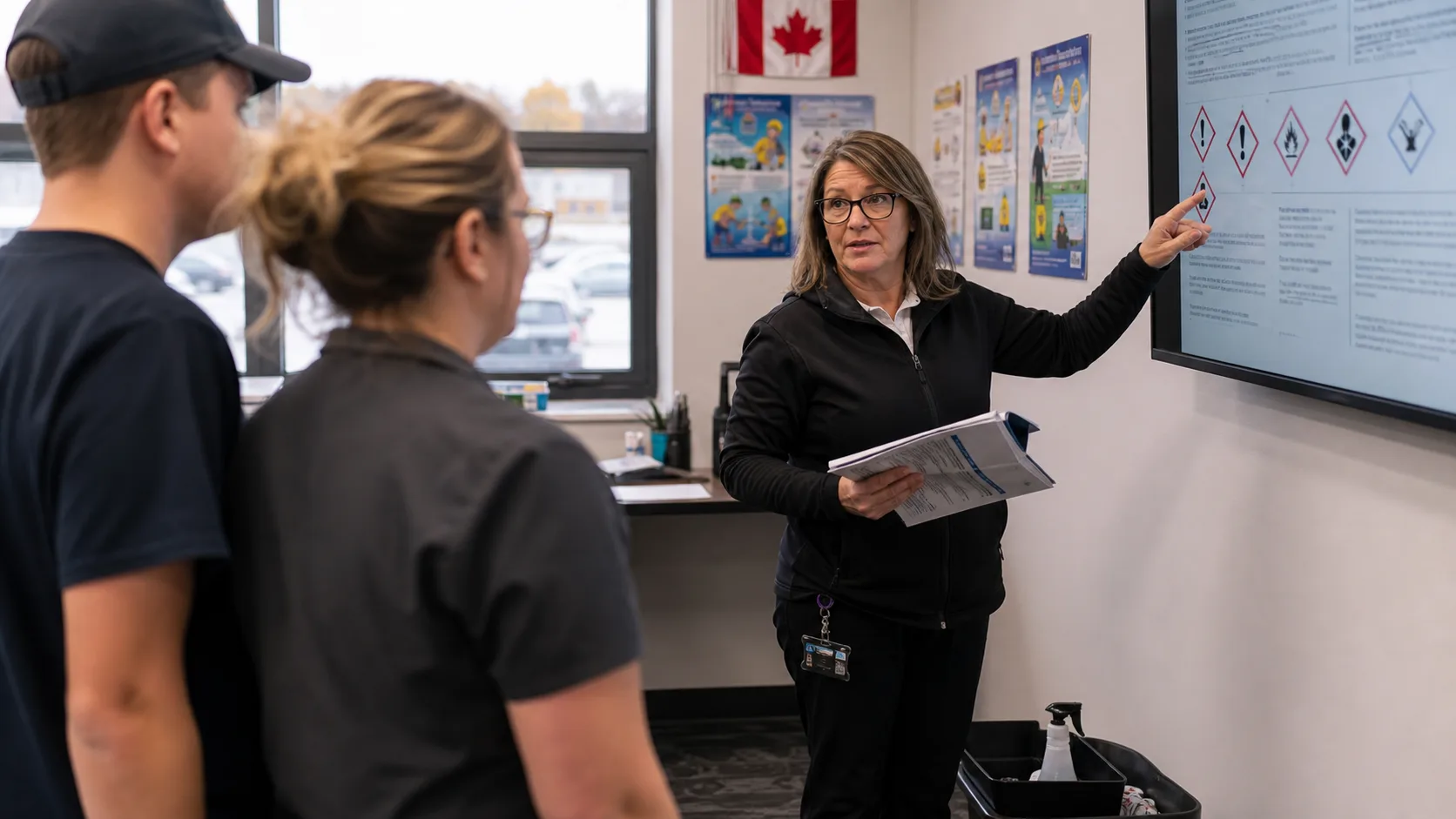
Used as directed, Solus’s Multi-Purpose Disinfectant is a lower-toxicity hard-surface option, not WHMIS-regulated or dangerous goods in Canada. Follow the PPE requirements on the current product label and SDS; the SDS recommends eye protection where splashing is possible and gloves for prolonged or repeated contact or sensitive skin (SDS §8). Follow the label.
For this guide’s place within the wider topic, see our hypochlorous acid resource hub.
Note: this guide is about surface disinfection. Hypochlorous acid skincare, eye-care, and wound-care products are a separate category with their own regulation and safety profile and are not covered here — Solus’s Multi-Purpose Disinfectant is authorized only as a hard-surface biocide.
Key takeaways
- Solus’s Multi-Purpose Disinfectant is not WHMIS-regulated and is not dangerous goods for transport in Canada. Follow the PPE requirements on the current product label and SDS; the SDS recommends eye protection where splashing is possible and gloves for prolonged or repeated contact or sensitive skin (SDS §8, §14, §15).
- Near-neutral (pH 5.0 to 7.0, SDS §9); follow the current label for ventilation, rinsing and residue management.
- HOCl is the same oxidant white blood cells (neutrophils) make via myeloperoxidase during the immune response (Ulfig & Leichert, 2020; Rees et al., 2012).
- Solus’s Multi-Purpose Disinfectant is a Health Canada-authorized surface biocide (market authorization no. 02557371, Food Premises). It is not for skin, wounds, eyes, or direct food contact.
- Well studied: recommended for the WHO Essential Medicines List as an environmental disinfectant (2025); in the 2025 WHO EML application, Médecins Sans Frontières describes HOCl as “a well-studied, non-toxic, non-corrosive, easy to use compound” (MSF, WHO EML application A.16, 2025).
What is HOCl, and why is it low-toxicity?
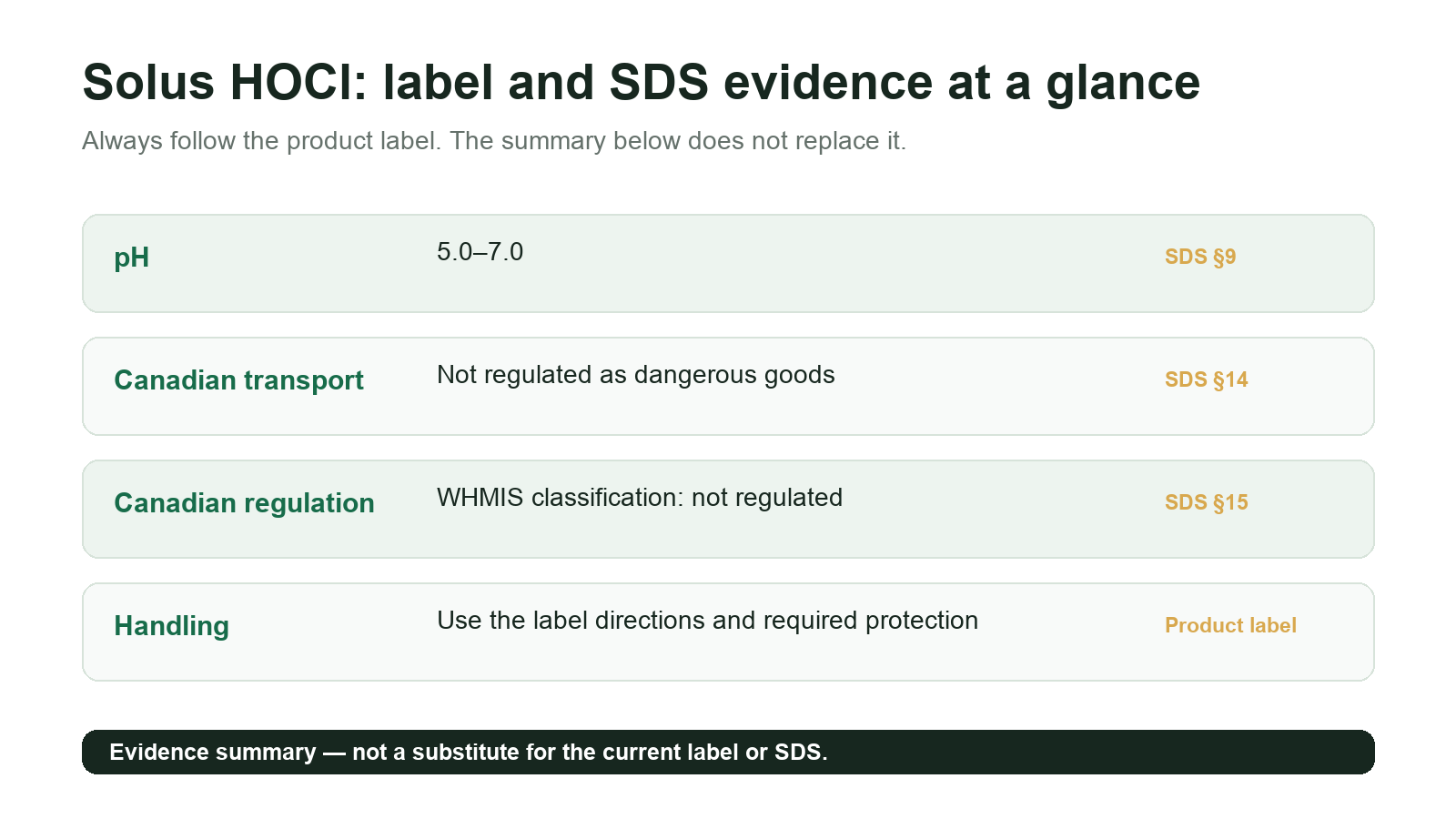
Hypochlorous acid is the neutral, highly active form of free chlorine at near-neutral pH. It is also produced naturally inside the body: when white blood cells fight an infection, the enzyme myeloperoxidase generates HOCl to neutralize pathogens (Ulfig & Leichert, 2020; Rees et al., 2012).
The Multi-Purpose Disinfectant is made by electrolysis of a dilute salt solution (0.5% NaCl) and water (SDS §3). The result is near-neutral at pH 5.0 to 7.0, with Solus SDS and lab data and an oxidation-reduction potential (ORP) of +600 to +1200 mV (Solus SDS §9). After use, the active chlorine level declines rather than forming a persistent surface film.
Is the Multi-Purpose Disinfectant safe to handle?
For normal use, follow the product label: use it in a well-ventilated area and avoid eye and skin contact. Follow the PPE requirements on the current product label and SDS; the SDS recommends eye protection where splashing is possible and gloves for prolonged or repeated contact or sensitive skin (SDS §8). The product is not classified as dangerous goods for transport in Canada (SDS §14), and the label still governs each task.
For a broader class comparison, see our guide to choosing disinfectants in Canada.
Before placing an order, use our guide to buying HOCl in Canada for supplier and documentation checks.
A facility should treat safe handling as a task check rather than a blanket claim about every situation. Before each job, confirm that the current label and SDS are available, that the target is a hard, non-porous surface within the product’s authorized use, and that visible soil has been removed. The application method and contact time should come from the label and the site’s written procedure. General information about HOCl should never replace the directions for this specific Multi-Purpose Disinfectant from Solus.
The pre-use check should also identify who is applying the product, which surfaces are in scope, and whether a potable-water rinse is required. Under the current Multi-Purpose Disinfectant label, food-contact surfaces must be rinsed with potable water after disinfection. The label also calls for a potable-water rinse on surfaces or objects that may come into contact with food, drinking water, infants or toddlers, animals, or the body. In a commercial setting, recording that rinse in the cleaning procedure helps the next shift follow the same verified process.
Storage is part of handling. Keep the Multi-Purpose Disinfectant from Solus sealed in its original opaque container, between 5°C and 25°C and out of direct sunlight. Check the manufacture date and Certificate of Analysis before use; the documented shelf life is one year from manufacture when those storage conditions are maintained. If the container, label, storage history, or expiry cannot be verified, pause and confirm the product information before putting it into service.
Scroll table sideways on mobile.
| Handling factor | Multi-Purpose Disinfectant |
|---|---|
| WHMIS regulated | No (SDS §15) |
| Dangerous goods for transport (Canada) | No (SDS §14) |
| PPE for normal use | Follow the PPE requirements on the current product label and SDS; the SDS recommends eye protection where splashing is possible and gloves for prolonged or repeated contact or sensitive skin (SDS §8) |
| Fumes | Use in a well-ventilated area; do not breathe fumes (label) |
| pH | Near-neutral, 5.0 to 7.0 (SDS §9) |
| Residue | Follow the current label for rinsing and residue management. |
Data last verified: July 2026.
For food processors, healthcare teams, and facility managers, the practical benefit is a documented, label-led surface-disinfection procedure, including PPE, ventilation and rinsing. See the Multi-Purpose Disinfectant range and the lab reports and biocide authorization.
Is it safe around food, people, and animals?
Solus’s Multi-Purpose Disinfectant is a Health Canada-authorized surface biocide, including for food-contact surfaces, under biocide authorization documentation. For surfaces or objects that may come into direct contact with infants or toddlers, animals, food, or drinking water, the label recommends rinsing with potable water after application. The product disinfects the surface, not the food itself, and is not for skin, wounds, eyes, or ingestion.
Used as directed on surfaces, it is a practical choice for spaces where people, food, and animals are present. Keep it out of eyes, store it sealed and out of direct sunlight, and follow the label.
Where can the Multi-Purpose Disinfectant be used?
The Multi-Purpose Disinfectant label lists institutional, industrial, and public environments, including hospitals and healthcare centres, dental clinics, commercial and residential buildings, schools and offices, food-processing premises, and homes. These examples sit within the use areas authorized by biocide market authorization no. 02557371. Use the product only on hard, non-porous surfaces, and follow the label’s potable-water rinsing recommendation where applicable. See the Multi-Purpose Disinfectant range.
What does the research say?
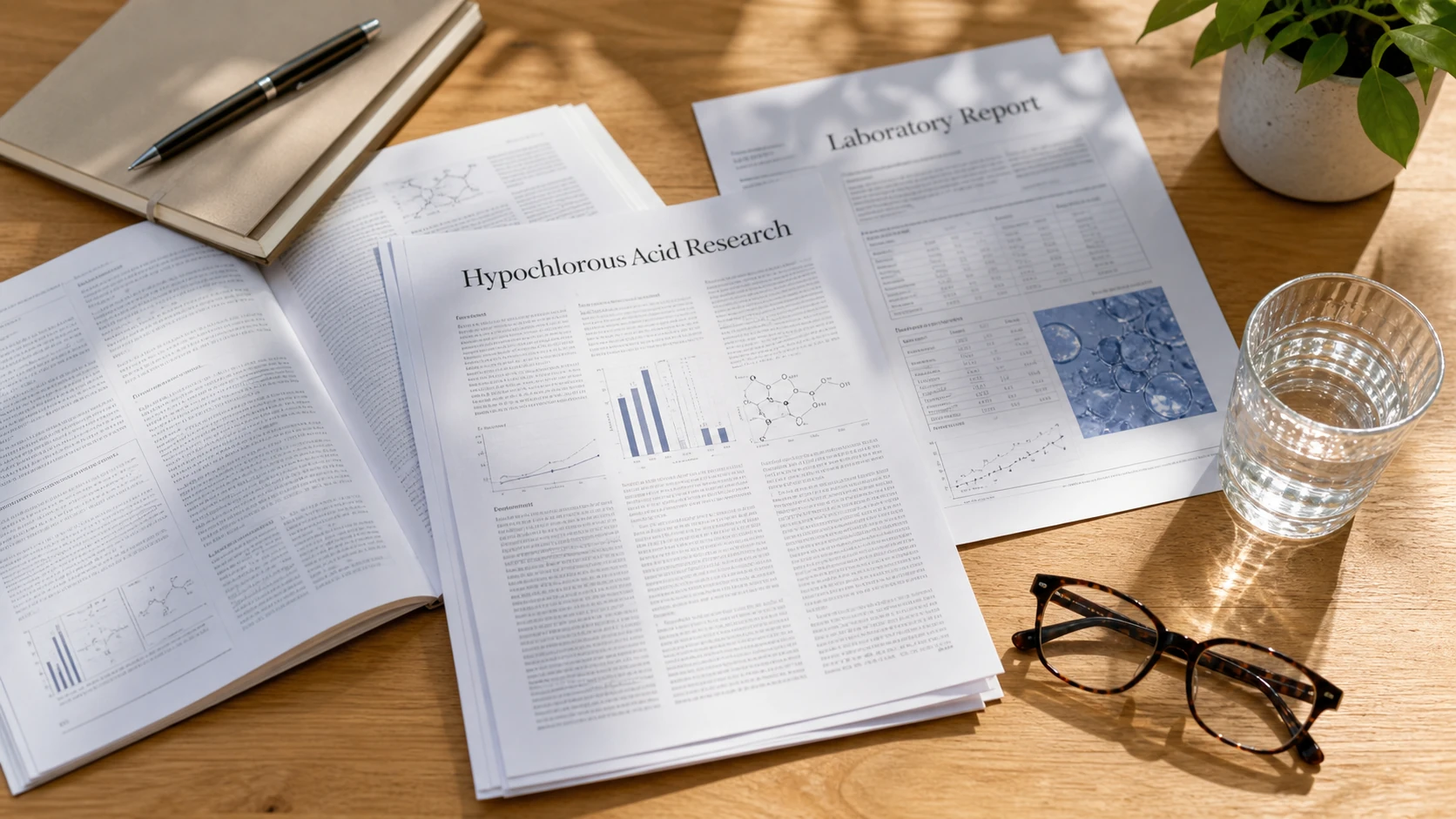
The scientific literature on HOCl is substantial. In 2025, the WHO Expert Committee on the Selection and Use of Essential Medicines recommended adding hypochlorous acid to the Essential Medicines List specifically as an environmental disinfectant (listed as “Disinfectant, not elsewhere classified”), separate from its general inclusion as a chlorine-based compound; the Committee did not recommend it for antisepsis or wound care, which matches the authorized scope of the Multi-Purpose Disinfectant from Solus as a surface biocide. In the 2025 WHO Essential Medicines List application for hypochlorous acid, Médecins Sans Frontières describes HOCl as “a well-studied, non-toxic, non-corrosive, easy to use compound” and a safer alternative to some other chlorine-generating disinfectants (MSF, WHO EML application A.16, 2025). That is MSF’s assessment of the compound in a policy context, not a blanket toxicology ruling for every concentration or use.
Note the scope: much of that literature covers HOCl the molecule across many uses that do not apply to the Multi-Purpose Disinfectant from Solus. Its authorized scope is hard-surface disinfection. Organism-specific test results are documented in the complete lab reports and in the full evidence tables on the related comparison articles. For how HOCl compares to bleach on safety and handling, see HOCl vs bleach. For how HOCl compares with quaternary ammonium disinfectants on residue and handling, see HOCl vs quats.
Frequently asked questions
Is hypochlorous acid toxic?
Used as directed, the Multi-Purpose Disinfectant from Solus is a lower-toxicity hard-surface option and is not WHMIS-regulated. Follow the PPE requirements on the current product label and SDS; the SDS recommends eye protection where splashing is possible and gloves for prolonged or repeated contact or sensitive skin (SDS §8). Keep it out of eyes and follow the label.
Do I need gloves or a mask?
Follow the product label. Follow the PPE requirements on the current product label and SDS; the SDS recommends eye protection where splashing is possible and gloves for prolonged or repeated contact or sensitive skin (SDS §8). Use it in a well-ventilated area and avoid eye and skin contact.
Is the product suitable for food-contact surfaces?
Solus’s Multi-Purpose Disinfectant is authorized for food-contact surfaces under Health Canada biocide market authorization no. 02557371 (Food Premises). It disinfects the surface, not the food, and the label requires a potable-water rinse after use on food-contact surfaces. Review the Multi-Purpose Disinfectant range.
Is HOCl safe around pets and children?
The Multi-Purpose Disinfectant from Solus is a hard-surface disinfectant. Use it only as directed, keep it out of reach and out of eyes, and do not use it on skin or for ingestion. Follow the label’s potable-water rinse directions where surfaces or objects may contact children, animals, food or drinking water.
What should a facility check before use?
Confirm that the current label and SDS are available, the target is a hard, non-porous surface within the authorized use, visible soil has been removed, and the application method, contact time, and any potable-water rinse match the label. Build those steps into the site’s written cleaning procedure.
How should the product be stored at work?
Keep the Multi-Purpose Disinfectant from Solus sealed in its original opaque container, between 5°C and 25°C and out of direct sunlight. Check the manufacture date and Certificate of Analysis before use. The documented shelf life is one year from manufacture when those storage conditions are maintained.
Facility-specific applications include daycare high-touch-surface disinfection and healthcare environmental-surface disinfection, each with its own label-led workflow.
Final thoughts
The safety story that matters day to day is practical: Solus’s Multi-Purpose Disinfectant is a near-neutral, lower-toxicity, Health Canada-authorized hard-surface biocide (market authorization no. 02557371). Follow the current label for rinsing and residue management. Use it on surfaces as directed, follow the label for handling, rinse food-contact surfaces with potable water where required, keep it out of eyes, and store it sealed and out of sunlight. Browse the Multi-Purpose Disinfectant range or review the certifications and lab reports.
See also
- HOCl vs bleach
- HOCl vs quats
- HOCl shelf life
- Solus products
- certifications and lab reports
- Solus HOCl FAQ
Sources
- Ulfig A, Leichert LI. Cell Mol Life Sci. 2020.
- Rees MD, et al. Free Radic Res. 2012.
- WHO Expert Committee on the Selection and Use of Essential Medicines (2025): recommended listing hypochlorous acid as an environmental disinfectant (“Disinfectant, not elsewhere classified”), added to the EML in 2025. Electronic EML: Electronic EML record · 2025 WHO EML application A.16
- Médecins Sans Frontières source quoted in the 2025 WHO EML application A.16.
- Solus SDS and biocide authorization